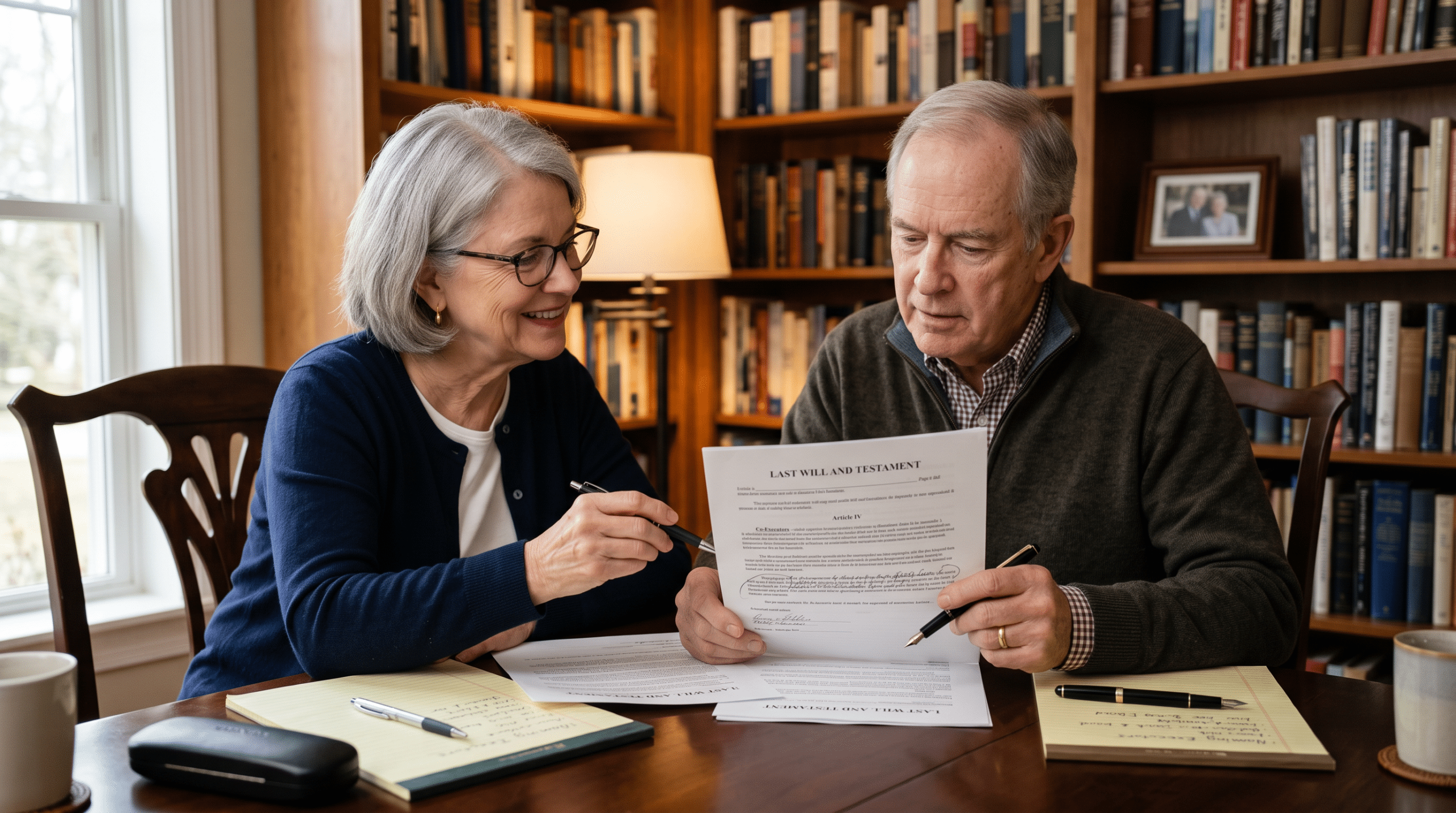
Choosing an executor is one of the most important steps in preparing a will. The executor may need to protect property, find assets, handle creditor claims, file tax returns, talk with beneficiaries, and distribute the estate. Some clients think naming two children or other trusted people as co-executors will make things fairer or easier. In some families, this works well. In others, it can lead to delays, disagreements, extra costs, and problems that might have been avoided by naming just one executor and one or more backups.
At Bernard Law P.C., we encourage clients in Suffolk County to think about how the people they choose as co-executors will actually work together, instead of picking them just because they have the same role in the family. Naming two children equally might seem fair, but being an executor is not the same as receiving an inheritance. It is a job that needs good judgment, time, organization, and the ability to work well with others, even under stress. Before naming co-executors, we suggest clients consider if sharing authority will help the estate process or make everyday decisions harder.
What Co-Executors Are Required To Do In New York
An executor does not receive legal authority simply because the person is named in a will. After death, the nominated executor generally must petition the appropriate New York Surrogate’s Court and obtain letters testamentary. The court also considers whether the nominated person is legally qualified to serve.
New York Surrogate’s Court Procedure Act § 707 identifies circumstances that may make a person ineligible or unsuitable to receive letters. For example, the statute addresses minors, individuals who are incompetent, certain nonresident noncitizens, and people who may be unfit because of dishonesty, improvidence, substance abuse, lack of understanding, or other disqualifying conditions. Therefore, naming someone in a will does not guarantee that the court will appoint that person.
Once appointed, co-executors generally share fiduciary duties to the estate and its beneficiaries. New York Estates, Powers and Trusts Law § 11-1.1 gives fiduciaries substantial authority, including the power to collect and manage assets, maintain insurance, make repairs, invest property, resolve claims, execute documents, sell certain property, pay proper administrative expenses, and make distributions. Those powers must be used for the estate’s benefit, not for the personal advantage of either executor.
Because each co-executor holds a legal office, neither should view the other as merely an assistant. Both may be expected to remain informed, maintain proper records, protect assets, and respond when significant estate decisions arise.
Two Co-Executors May Need To Act Together
One of the most important issues is how decisions will be made. Under New York Estates, Powers and Trusts Law § 10-10.7, a power held by two fiduciaries generally must be exercised jointly unless the governing instrument provides otherwise. When three or more fiduciaries are serving, a majority may generally act, subject to the terms of the will and the nature of the particular power.
This distinction can have significant practical consequences. If two co-executors must act jointly, both may need to approve transactions, sign documents, communicate with financial institutions, and agree on decisions concerning property or distributions. A disagreement between them may delay the sale of a home, the resolution of a creditor claim, or the distribution of assets to beneficiaries.
Even when the co-executors are not openly hostile, ordinary differences can create problems. One may want to sell estate property quickly, while the other believes the family should wait. One may be highly responsive, while the other frequently delays reviewing documents. One may live in Suffolk County, while the other lives across the country and has limited availability. These issues may turn routine administration into an extended process.
A carefully drafted will may address certain decision-making concerns, but drafting cannot transform incompatible people into effective fiduciary partners. The personal relationship and working habits of the proposed co-executors remain central to the decision.
When Naming Co-Executors May Be Appropriate
Co-executors may be useful when the individuals have complementary abilities and a demonstrated history of cooperation. For example, one child may understand the family business while another has strong financial and administrative skills. Sharing responsibilities may also be helpful when the estate includes multiple properties, complicated tax matters, or assets requiring different forms of oversight.
Sometimes, clients name a family member along with a professional or institutional fiduciary. This can bring together family knowledge and professional financial management. However, professional fiduciaries usually charge fees, so clients should know how authority and payment will work before choosing this option.
The best co-executor teams are people who communicate well, respect each other’s judgment, and put their duties before personal disagreements. They should also know that working together does not mean splitting the estate into separate parts. Each person is still responsible for the whole process, even if they divide up some tasks.
We also advise clients to consider age, health, location, workload, and family circumstances. A person who is appropriate today may be unable or unwilling to serve many years from now. The will should therefore include clear successor appointments in case one or both primary nominees cannot act.
Why Fairness Is Not Always A Good Reason To Name Co-Executors
Many parents name all their children as co-executors to avoid anyone feeling left out. While this is understandable, treating children equally does not mean they all need to have the same authority. Beneficiaries can still get equal shares of the estate even if only one child is the executor.
A better question is who can handle the estate well, efficiently, and fairly. The best executor might not be the oldest child, the one who lives nearby, or the one with the strongest personality. The choice should be based on practical skills, not family order.
Naming co-executors just to avoid hurt feelings can put children in a tough spot later. If they already have a tense relationship, managing the estate may make old disagreements worse. Beneficiaries might have to wait while the executors argue over property values, paperwork, sales, or distributions. Legal costs can also go up if they need separate lawyers or court help.
We would rather address these concerns during the planning process than leave surviving family members to resolve them after death. A thoughtful explanation of the executor decision, when appropriate, may be more beneficial than creating shared authority that is unlikely to function well.
New York Snowbirds Should Also Consider Florida Administration Issues
Clients who divide their time between New York and Florida should consider where their property is located and whether an additional Florida probate proceeding could become necessary. Florida uses the term “personal representative” rather than executor, although the role is generally comparable in estate administration.
Florida Statutes § 733.615 provides that when multiple personal representatives are appointed under a modern will, a majority generally may act unless the will provides otherwise. The statute also recognizes limited situations involving delegated authority, receipt of estate property, and emergency action needed to preserve the estate. This rule differs from New York’s general treatment of powers held by two fiduciaries, which makes coordinated drafting especially important for snowbird families.
A New York will should not be treated as an isolated document when a client owns Florida real estate or has established Florida residency ties. We review the complete ownership structure, beneficiary designations, trust planning, and potential probate exposure in both states. The goal is not simply to name fiduciaries, but to create a plan that can be administered efficiently wherever the client’s assets are located.
Should You Choose One Executor Or Co-Executors?
There is no universal answer. Co-executors may add valuable skills, oversight, and shared responsibility when the right individuals are selected. They may also create delay and conflict when cooperation is uncertain or joint decision-making becomes impractical.
In many cases, naming one capable executor and one or more successors provides clearer authority and a more efficient administration. In other situations, two or more fiduciaries may be justified by the size, complexity, or family circumstances of the estate. We help clients evaluate the decision based on the actual responsibilities involved rather than assumptions about fairness or family tradition.
The executor provision in a will should reflect the same originality and care as the rest of the estate plan. Choosing the right person or combination of people can reduce conflict, protect estate property, and make an already difficult period easier for surviving family members.
FAQs About Naming Co-Executors In New York
Can Two People Serve As Co-Executors Of A New York Estate?
Yes. A New York will may nominate two or more people to serve together as executors, provided they are eligible and appointed by the Surrogate’s Court. Each nominee generally must complete the required qualification process before receiving authority to act. Naming co-executors in the will does not, by itself, give them immediate control over estate assets.
Do Two Co-Executors Have To Agree On Every Decision?
Under New York Estates, Powers and Trusts Law § 10-10.7, powers held by two fiduciaries generally must be exercised jointly unless the will provides otherwise or the particular power is legally exercisable by one fiduciary. As a practical matter, many important transactions may require cooperation and signatures from both co-executors. The will should be drafted carefully if the client wants to modify how certain decisions are made.
What Happens If Co-Executors Cannot Agree?
Disagreement can delay estate administration and increase legal expenses. The executors may need legal advice, mediation, or direction from the Surrogate’s Court. In serious situations, an interested party may seek removal or other judicial relief. Persistent conflict can prevent the estate from selling property, resolving claims, or making timely distributions.
Can One Co-Executor Do Most Of The Work?
The co-executors may divide practical tasks, but each remains a fiduciary and should remain informed about the estate. One executor should not simply sign documents without understanding them or ignore the administration entirely. A co-executor may face responsibility for failing to act appropriately, particularly when the person knew or should have known that estate property was at risk.
Will Naming Co-Executors Increase The Cost Of Probate?
It can. Additional signatures, communications, document review, travel, and disagreements may add time and expense. If the co-executors retain separate lawyers because their interests or positions conflict, costs may rise further. A cooperative arrangement may work efficiently, but clients should not assume that adding another executor automatically makes administration easier.
Should All Of My Children Be Named As Co-Executors?
Not always. Children can inherit equally without all being executors. We suggest choosing executors for their reliability, judgment, availability, financial skills, and ability to work together. Naming every child just to avoid hurt feelings can lead to problems later, especially if they have different personalities, interests, or relationships.
Can A Co-Executor Decline To Serve?
Yes. A nominated executor is not generally forced to accept the appointment. If one nominee declines, is ineligible, or cannot serve, the remaining nominee may be able to proceed depending on the will and applicable law. This is one reason a will should also name successor executors and clearly address what happens when a primary nominee is unavailable.
Discuss Your Estate Plan Needs With Bernard Law P.C.
Choosing an executor is not a ceremonial decision. The person or people selected may eventually control property, resolve financial issues, communicate with beneficiaries, and carry out the instructions in the will. At Bernard Law P.C., we help clients evaluate whether one executor, co-executors, or a professional fiduciary arrangement best fits the family, the assets, and the client’s long-term objectives.
A carefully drafted will can reduce uncertainty and give the right fiduciaries the authority needed to administer the estate effectively. We can review existing executor appointments, identify potential areas of conflict, and prepare a customized estate plan that reflects your family’s circumstances. Call our Suffolk County estate planning lawyer at Bernard Law P.C. at (631) 378-2500 to schedule a free consultation.