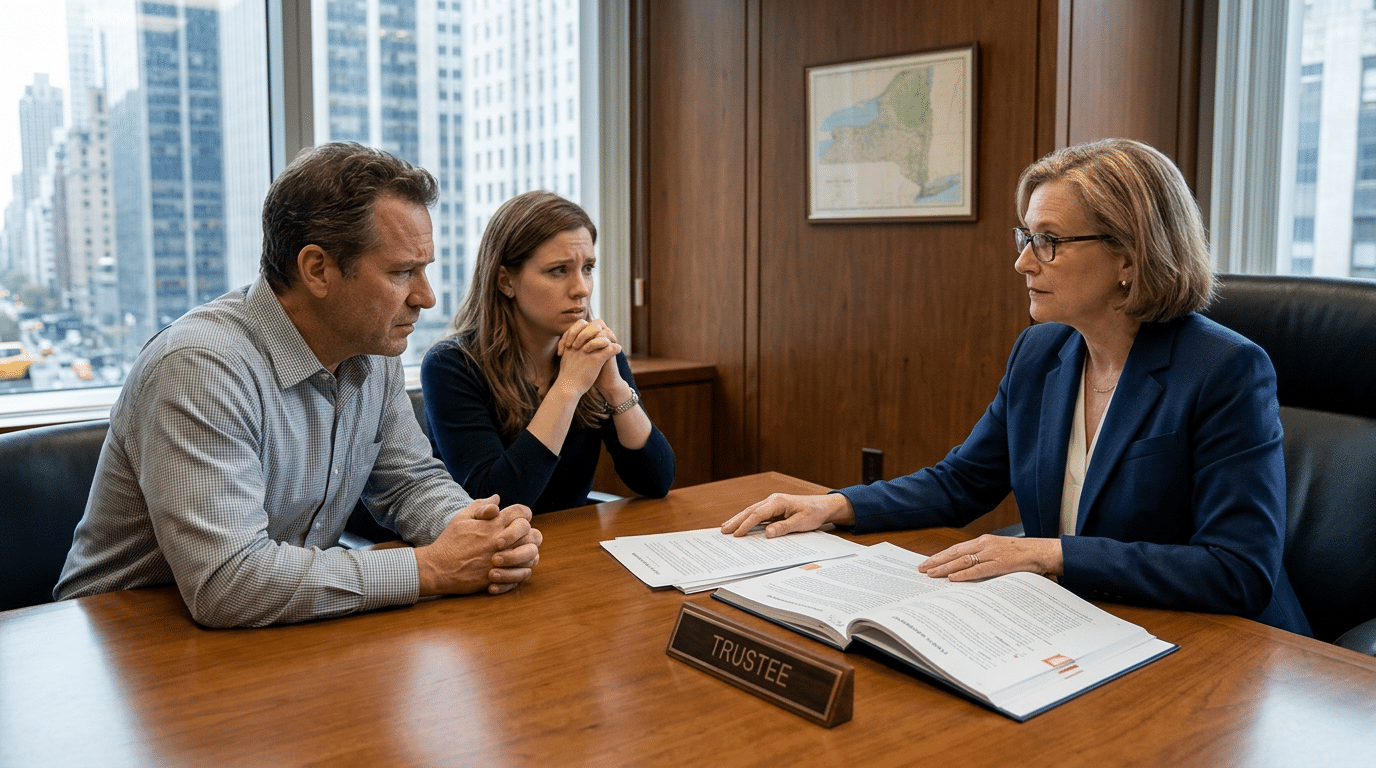
When a trust beneficiary asks for money, and the trustee says no, the natural reaction is often frustration or suspicion. A beneficiary may believe that because money is being held for his or her benefit, the trustee must release it whenever requested. New York trust law does not always work that way. Whether a trustee can refuse to make a distribution depends heavily on the language of the trust, the type of distribution involved, and the discretion granted to the trustee. In some trusts, the trustee has considerable authority to decide when distributions are appropriate, while other trusts require payments at specific times or after certain events occur.
At Bernard Law P.C., we often remind both trustees and beneficiaries in Suffolk County that the trust document is the starting point. A trustee cannot simply substitute personal preferences for the directions contained in the trust. At the same time, a beneficiary generally cannot demand a discretionary distribution merely because the beneficiary wants access to the money. Understanding the difference between a mandatory distribution and a discretionary distribution is critical when determining whether a trustee’s refusal is legally justified.
The Trust Document Usually Determines Whether A Distribution Is Required
A trust is created to carry out the intentions of the person who established it, sometimes called the grantor or settlor. The trust agreement typically identifies the beneficiaries, describes what property is held in trust, appoints a trustee, and explains when income or principal may or must be distributed.
New York Estates, Powers and Trusts Law § 11-1.1 recognizes trustees as fiduciaries and provides them with powers needed to administer trust property. Those powers, however, are subject to the terms of the governing trust instrument. A trustee’s authority therefore cannot be evaluated without carefully reading the document.
Some trusts use mandatory language. For example, a trust might require the trustee to distribute all income to a beneficiary every quarter or distribute one-third of the principal when the beneficiary reaches a particular age. If the stated condition has occurred and no other provision permits the trustee to withhold payment, refusing the distribution may violate the trust.
Other trusts deliberately give the trustee discretion. The agreement may authorize distributions for a beneficiary’s health, education, maintenance, or support, or may allow distributions whenever the trustee believes they are appropriate. In those situations, the beneficiary may have a beneficial interest without having an unrestricted right to demand money on request.
Discretion Does Not Mean A Trustee Can Do Whatever He Or She Wants
A trustee who receives discretionary authority does not receive unlimited personal control over the trust. Trustees are fiduciaries, which means they administer property for the benefit of others and must exercise their powers consistently with the trust’s purposes.
The wording of the distribution provision matters considerably. A trust authorizing distributions for health, education, maintenance, and support creates a different standard from a trust granting broader discretion concerning a beneficiary’s welfare. The trustee should consider the factors contemplated by the document rather than relying on personal feelings about the beneficiary.
New York EPTL § 10-10.1 also addresses certain discretionary distribution powers when the trustee is personally a beneficiary. The statute generally restricts a trustee-beneficiary’s ability to make discretionary distributions to himself or herself unless one of the statutory exceptions applies, including distributions governed by an ascertainable health, education, maintenance, or support standard.
A trustee who consistently refuses reasonable requests without considering the trust’s terms may eventually face scrutiny. Likewise, a trustee who favors one beneficiary for improper reasons or uses withholding as punishment may create serious fiduciary concerns.
Mandatory And Discretionary Distributions Are Very Different
The distinction between mandatory and discretionary language is frequently at the center of trust disputes.
Suppose a trust provides that a beneficiary “shall receive” $100,000 when reaching age 35. Once the beneficiary reaches that age, the trustee ordinarily cannot transform that required payment into a discretionary decision merely because the trustee disagrees with how the beneficiary intends to spend the money.
Compare that with a trust providing that the trustee “may distribute” principal as the trustee determines necessary for the beneficiary’s support. In that situation, the trustee is being asked to exercise judgment. The beneficiary’s request is relevant, but the request itself does not necessarily create an automatic right to payment.
New York Surrogate’s Court Procedure Act § 2102 provides a mechanism through which a person entitled to an interest in a trust may seek relief against a fiduciary, including an order requiring payment of a trust interest under appropriate circumstances. The court can therefore become involved when a beneficiary believes a trustee is improperly withholding a distribution.
This is why we recommend reviewing the exact trust language before assuming either the trustee or beneficiary is correct.
A Beneficiary Can Ask The Court To Review The Trustee’s Conduct
Beneficiaries are not powerless when a trustee refuses to provide information or make distributions.
New York SCPA § 2102 allows proceedings seeking relief against a fiduciary. Among other things, the statute permits an interested person to seek information concerning trust assets after a written request has gone unanswered and can provide a means of seeking payment of a trust interest when appropriate.
Accounting proceedings may also become important. Under SCPA § 2205, the Surrogate’s Court may require a fiduciary to provide an intermediate or final accounting. An accounting can reveal trust assets, investment activity, expenses, distributions, trustee compensation, and other transactions affecting beneficiaries.
A beneficiary who believes money is being improperly withheld may therefore need more than an explanation from the trustee. Reviewing the trust document alongside the financial records can help determine whether the trustee is properly exercising discretion or failing to perform required duties.
Court proceedings should not automatically be the first step in every disagreement. Many disputes can be addressed through a formal request for information, review of the trust provisions, and communication between the parties. When those efforts fail, however, New York law provides judicial remedies.
Some Trusts Are Designed To Restrict A Beneficiary’s Access To Money
A trustee’s refusal is not always evidence of wrongdoing. Sometimes withholding a distribution is precisely what the person who created the trust intended.
A parent may establish a trust because an adult child struggles with spending, creditors, substance abuse, divorce concerns, or other financial risks. The trust may intentionally prevent the beneficiary from withdrawing principal whenever desired. That restriction can be central to the estate plan rather than an administrative inconvenience.
Special needs trusts present another example. New York EPTL § 7-1.12 establishes rules governing supplemental needs trusts. These trusts can be structured so that assets supplement rather than replace certain government benefits. A trustee therefore may need to consider whether a requested payment could interfere with the beneficiary’s benefits before making a distribution.
New York EPTL § 7-1.6 also permits a court, under specific circumstances, to authorize an allowance from trust principal for an income beneficiary whose support or education is not sufficiently provided for. The statute illustrates why trust distribution questions often require consideration of both the document and New York law.
New York And Florida Snowbirds Should Review Which State’s Law Governs The Trust
Families with connections to New York and Florida can face an additional question: which state’s law applies?
This can matter when a trust was created in New York, but the grantor, trustee, or beneficiary later moves to Florida. The trust document may contain a governing-law provision, and the location of trust administration can also affect practical issues.
Florida’s Trust Code expressly addresses discretionary powers. Florida Statutes § 736.0814 generally requires a trustee exercising discretionary authority to act in good faith and consistently with the terms and purposes of the trust and the interests of its beneficiaries. Florida Statutes § 736.0504 also recognizes that a beneficiary generally cannot compel a purely discretionary distribution merely because the beneficiary requests one.
For snowbird families, this makes periodic trust review particularly important. Moving between New York and Florida does not mean an existing trust automatically becomes ineffective, but the change can raise legal, tax, and administrative questions that should be evaluated rather than assumed.
The Answer Depends On Why The Trustee Is Saying No
A trustee can sometimes refuse to make a distribution in New York, but there is no single rule allowing a trustee to deny every request. The trust language controls much of the analysis.
If the distribution is discretionary, the trustee may have legitimate authority to decline the request after properly considering the circumstances. If the trust requires the distribution, the trustee may have far less flexibility. And if the trustee is withholding money because of personal hostility, self-interest, or reasons unrelated to the trust, the beneficiary may have grounds to seek judicial relief.
When a disagreement occurs, we look first at the trust agreement, then at the trustee’s stated reason for refusing the distribution, the financial circumstances of the trust, prior distributions, and the applicable provisions of New York law. Those facts usually determine whether the refusal is a proper exercise of fiduciary judgment or a problem that requires legal action.
Frequently Asked Questions About Trustee Distributions In New York
Can A Trustee Simply Say No When I Ask For Money?
Sometimes, but not automatically. If the trust gives the trustee discretion over distributions, the trustee may have authority to deny a request. The trustee should still evaluate the request according to the standards and purposes written into the trust. If the trust mandates a distribution after a particular event, the trustee generally has much less discretion to refuse it.
What If The Trust Says The Trustee Has “Absolute Discretion”?
Strong discretionary language can provide the trustee with substantial authority, but it does not convert trust assets into the trustee’s personal property. The trustee remains a fiduciary and must administer the trust according to its terms and purposes. Whether a refusal is proper depends upon the entire trust instrument and the circumstances surrounding the decision.
Can I Force A Trustee To Make A Required Distribution?
Potentially. New York SCPA § 2102 permits proceedings seeking relief against fiduciaries and specifically contemplates payment of an interest in a trust to someone entitled to receive it. Before commencing litigation, we typically examine the trust language carefully to determine whether the requested payment is truly mandatory or subject to trustee discretion.
Can I Demand An Accounting From The Trustee?
In appropriate circumstances, beneficiaries and other interested persons may ask the Surrogate’s Court to compel a fiduciary to account. SCPA § 2205 authorizes compulsory accounting proceedings. An accounting can be particularly important when a beneficiary suspects distributions are being withheld while trust assets are being mishandled, depleted, or distributed inconsistently.
Call Our Trust Attorney In Shoreham For A Free Consultation
Disputes over trust distributions often involve much more than a trustee simply saying yes or no. We examine the language of the trust, the type of distribution involved, the trustee’s fiduciary obligations, and the rights given to the beneficiary under New York law. We assist trustees who need guidance about properly exercising their authority as well as beneficiaries who believe trust assets are being improperly withheld.
If you are a trustee unsure whether a distribution should be made, or a beneficiary who believes a trustee is improperly refusing to release trust assets, Bernard Law P.C. can help you understand the trust and the legal options available. Call our Suffolk County estate planning lawyer at Bernard Law P.C. at (631) 378-2500 to schedule a free consultation.