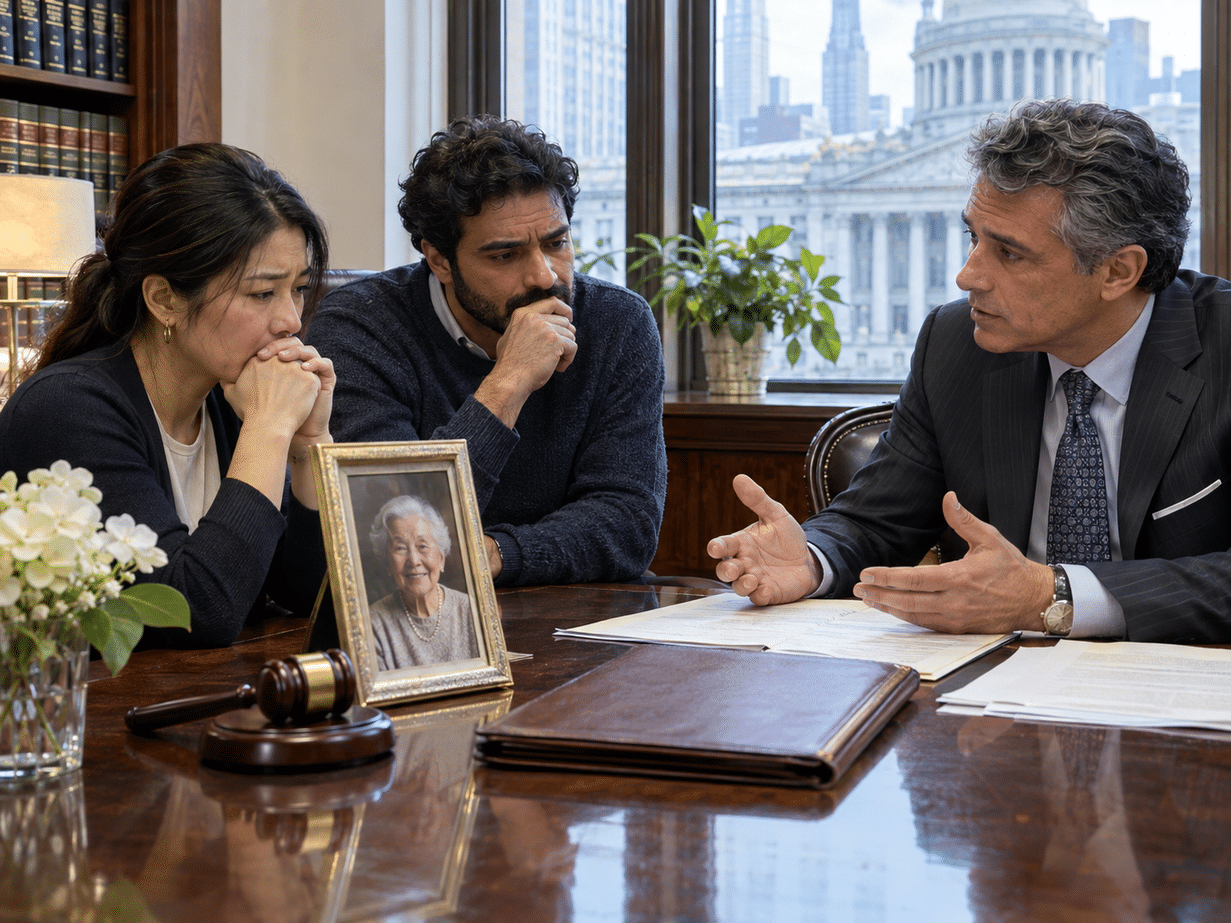
A person’s mental capacity at the time they sign a will affects whether their wishes are legally enforceable in New York. If family members question whether someone understood their will, the issue may lead to a contested probate case. These situations often involve older adults, people with dementia, or those with significant cognitive decline. Still, having a medical diagnosis does not automatically mean someone cannot make a valid will. New York law focuses on whether the person had enough testamentary capacity when the will was signed. If a court finds that capacity was lacking, it can significantly change who inherits the person’s property.
New York’s Legal Requirements for Testamentary Capacity
Under New York Estates, Powers and Trusts Law (EPTL) § 3-1.1, an individual must be at least 18 years old and possess sound mind and memory to execute a valid will.
The statute provides:
“Every person eighteen years of age or over, of sound mind and memory, may by will dispose of real and personal property and exercise a power to appoint such property.”
New York courts usually look at whether the person understood what it meant to make a will, knew the general nature and amount of their property, and recognized their relationships with people who would normally inherit.
These requirements come from Matter of Kumstar, 66 N.Y.2d 691 (1985). We tell our clients that testamentary capacity does not mean someone needs perfect memory or full mental sharpness. A person with occasional confusion or early-stage dementia may still have enough capacity during a clear period.
The Court May Reject the Will During Probate
When a will is presented for probate, the Surrogate’s Court must determine whether the document satisfies New York’s legal requirements. Under Surrogate’s Court Procedure Act (SCPA) § 1408, the court must be satisfied that the will was properly executed and that the deceased person was legally competent when signing it.
If the court finds that the person did not have testamentary capacity, the will cannot be accepted as valid. As a result, the people named in that will cannot inherit property just because they were included in it.
We also explain that the court’s decision is about the person’s capacity when they signed that specific will. It does not automatically cancel every document or financial transaction the person made during their life.
An Earlier Valid Will May Determine Inheritance
When a court rejects a will because of insufficient testamentary capacity, an earlier valid will may control the distribution of the estate. For example, suppose a Shoreham resident executed a valid will in 2018 dividing an estate equally among three children. In 2024, the individual signed another will leaving everything to one child. If the court determines that the individual lacked testamentary capacity when executing the 2024 document, the 2018 will may remain legally effective.
However, earlier wills do not automatically become enforceable simply because a later document is rejected. New York EPTL §§ 3-4.1 and 3-4.6 address revocation and revival of wills. We must examine the documents, their execution, and whether any valid revocation occurred before determining which instrument controls.
The Estate May Be Distributed Under New York Intestacy Laws
If the court rejects the challenged will and no legally effective earlier will exists, the estate may be distributed under New York’s intestate succession laws. EPTL § 4-1.1 establishes which surviving relatives inherit property when a person dies without an effective will.
For example, when a deceased person leaves a spouse and children, the surviving spouse generally receives the first $50,000 plus half of the remaining intestate estate. The children receive the other half of the remaining estate, divided according to the statute.
These rules can lead to results that are very different from what the deceased person wanted. An unmarried partner, close friend, or charity named in the rejected will may get nothing under intestate succession.
Medical Records and Witness Testimony Can Influence the Decision
Testamentary capacity disputes often depend on evidence establishing the person’s mental condition when the will was executed.
Medical records, cognitive tests, prescription histories, and statements from doctors can provide helpful information. People who saw the will being signed can also say whether the person understood the document and made their decisions clearly. Under SCPA § 1404, examinations of attesting witnesses and other permitted individuals can help parties investigate the circumstances surrounding the execution.
We point out that records showing dementia or cognitive problems months before or after signing are not always final proof. Courts look at all the evidence to decide if the person had the needed understanding when the will was actually signed.
Family Members May Challenge the Will in Surrogate’s Court
Under SCPA § 1410, individuals whose interests would be adversely affected by admitting a will to probate may have standing to file objections. A family member or beneficiary who qualifies can challenge the will if they believe the person did not have enough testamentary capacity. The person submitting the will for probate must prove capacity, although the law usually assumes an adult has enough mental capacity.
Legal disputes may include medical evidence, depositions, testimony, and disagreements about the deceased person’s behavior. We encourage families to look into concerns quickly because there are deadlines for probate objections.
Protecting the Validity of Estate Planning Documents
Testamentary capacity disputes demonstrate why proper estate planning procedures are important, particularly when an individual faces cognitive or medical concerns.
Having an attorney present, keeping careful records of instructions, and getting assessments when needed can help show that a person understood their decisions. These steps do not guarantee a will cannot be challenged, but they can offer important evidence. At Bernard Law P.C., we help Suffolk County residents learn about the legal rules for valid wills and what happens if there are disputes about testamentary capacity.
Frequently Asked Questions About Testamentary Capacity in New York
Can Someone With Dementia Legally Sign a Will in New York?
Yes. A dementia diagnosis does not automatically prevent someone from executing a legally valid will. New York courts focus on the person’s mental condition when the document was signed rather than relying exclusively on a medical diagnosis. An individual with dementia may experience periods of clarity during which they understand their property, intended beneficiaries, and the consequences of signing a will. We explain that medical evidence and witness observations can become especially important when evaluating these circumstances. However, if the person lacked the required understanding at execution, the court may reject the will.
How Do New York Courts Determine Whether Someone Lacked Testamentary Capacity?
Courts examine whether the deceased person understood the purpose of making a will, the general nature and extent of their assets, and the people who would ordinarily be considered potential beneficiaries. Medical records, testimony from witnesses, and observations from the attorney who prepared the document may all be relevant. Evidence of confusion, dementia, or memory impairment must be considered in context. We explain that the central question is whether the individual possessed sufficient understanding when executing the document, not whether they experienced cognitive problems at other times.
Can a Will Be Challenged After It Has Already Been Admitted to Probate?
Potentially, although challenging a will after probate has been granted is more procedurally complicated. Depending on the circumstances, an interested person may seek relief from an existing probate decree under applicable New York procedural rules. SCPA § 501 addresses the circumstances in which a Surrogate’s Court may grant relief concerning its decrees. However, the availability of relief depends on the facts, the grounds asserted, and applicable procedural restrictions. We recommend investigating concerns promptly rather than assuming that a completed probate proceeding can easily be reopened.
Contact Bernard Law P.C. for Estate Planning and Testamentary Capacity Concerns in Suffolk County
Questions about testamentary capacity can lead to serious legal and financial problems for families, especially when there are disputes about inheritance or the validity of a loved one’s will. At Bernard Law P.C., we help people understand New York estate planning rules, why properly signed wills matter, and the legal issues that come up when testamentary capacity is in question.
Our law office is in Shoreham, New York, and we work with clients across Suffolk County. If you want to make sure your estate planning documents are valid or need advice about a loved one’s will, we can help you understand your legal options. Contact our Suffolk County estate attorney at Bernard Law P.C. at (631) 378-2500 to schedule a free consultation.