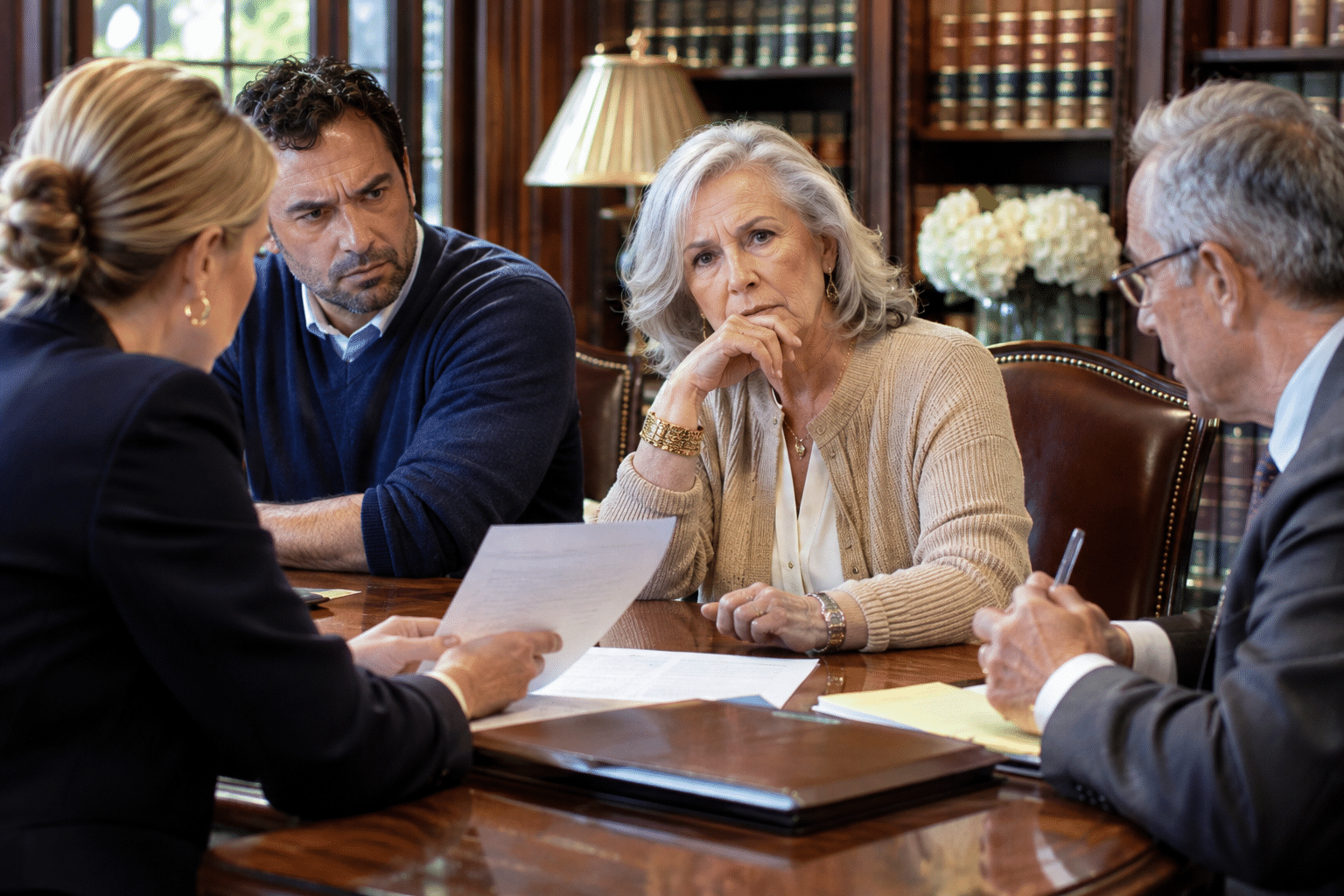
When someone you care about dies, finding unexpected changes in their will can make you question whether those changes truly reflect their wishes. Sometimes, a caregiver, relative, or trusted person receives a large inheritance just before the person’s death. This can lead to claims that someone pressured or influenced the deceased to sign a will they might not have agreed to otherwise. In New York, you can challenge a will if there is proof it was made under undue influence. But it takes more than just showing a close relationship or financial benefit to prove this. Knowing how New York courts look at these cases can help families protect their inheritance and see if a will truly shows their loved one’s intentions.
Understanding Undue Influence Under New York Estate Law
Undue influence happens when someone uses unfair pressure, manipulation, or force to take away another person’s independent decision-making about their estate. Unlike normal persuasion, undue influence means someone else’s wishes replace those of the person making the will, who is called the testator.
New York courts have set clear rules for deciding if undue influence makes a will invalid. In Matter of Walther, 6 N.Y.2d 49 (1959), the New York Court of Appeals said that undue influence must involve enough pressure to take away the testator’s free will. Usually, there must be proof of motive, opportunity, and actual improper influence that changed the testator’s choices.
It’s important to remember that taking care of an elderly parent, talking about inheritance, or getting a bigger share of an estate does not automatically mean there was undue influence. Courts have to tell the difference between normal family relationships and actions that wrongly control someone’s decisions about their will.
Legal Requirements for a Valid New York Will
In New York, a traditionally written will must satisfy specific execution requirements. Generally, the testator must sign at the end of the document, acknowledge the signature or sign before the required witnesses, and declare that the document represents their will. Also, at least two witnesses must attest to the signature and sign within the required 30-day period.
While these formal steps help prove a will is real, they do not guarantee that it was made without improper influence. Even if a will is signed and witnessed correctly, it can still be challenged if the testator’s own judgment was taken over by pressure.
According to Surrogate’s Court Procedure Act (SCPA) § 1408, the court has to look at the situation around the will and decide if it was properly made by someone who was capable and not under pressure. This is especially important when someone claims there was undue influence.
Evidence That May Establish Undue Influence
Undue influence usually happens in private, so it can be hard to find direct proof. Because of this, New York courts allow people to use circumstantial evidence that shows a pattern of manipulation or pressure. We look at whether the person who died was physically or mentally weak when they signed the will. We also check if someone controlled who could see the testator, set up meetings with lawyers, helped prepare estate papers, or kept the testator away from other family members.
If there are sudden changes to long-standing inheritance plans, it may be worth looking into, especially if the changes give much more to someone who had a lot of control over the person who died.
Medical records, messages, financial documents, earlier wills, and witness statements can help show what happened. Still, just having suspicious circumstances is not enough without proof that links the alleged wrongdoing to the signing of the will in question.
Filing an Undue Influence Challenge in New York Surrogate’s Court
According to SCPA § 1410, people whose interests would be harmed if a will is accepted by the court can file formal objections. This usually includes people named in an earlier will or family members who would inherit if the current will is found invalid. Before making objections, people involved can get information through examinations allowed by SCPA § 1404. This can include asking questions to the lawyer who wrote the will and the witnesses who saw it signed.
We suggest that families keep important documents and get legal advice quickly because probate cases have deadlines. If there are pre-objection examinations, SCPA § 1410 usually requires objections to be filed within ten days after those exams end, unless a different deadline is set by agreement or the court.
Potential Outcomes When Undue Influence Is Proven
If the Surrogate’s Court finds that a will was made because of undue influence, it can refuse to accept that will or certain parts of it. This can greatly change who gets the deceased person’s property. If there is an earlier valid will, that document may decide how the estate is handled, depending on its validity and the situation. If there is no valid will, inheritance usually follows New York’s intestate succession rules under EPTL § 4-1.1. If a challenge is not successful, it can lead to more legal costs, delays in distributing the estate, and more family conflict. That’s why we suggest looking closely at the evidence before starting a lawsuit.
Frequently Asked Questions About Undue Influence and New York Wills
Can Someone Challenge a New York Will Simply Because They Were Disinherited?
Being disinherited does not automatically establish grounds to invalidate a will. New York generally permits individuals to choose how their property will be distributed, subject to certain statutory protections, including a surviving spouse’s elective share under EPTL § 5-1.1-A.
Who Has the Burden of Proving Undue Influence in New York?
Generally, the person contesting the will must prove undue influence by a preponderance of the evidence. This means demonstrating that improper influence was more likely than not responsible for the disputed testamentary decision.
Can a Caregiver Be Accused of Undue Influence for Receiving an Inheritance?
Yes. A caregiver who gets a large inheritance may be accused of undue influence, especially if the person who died was weak or depended on the caregiver for daily needs.
What Happens If a New York Court Invalidates a Will?
When a court refuses to admit a will to probate because of undue influence, the estate may be distributed according to an earlier valid will. If no valid will exists, New York’s intestate succession statute, EPTL § 4-1.1, generally determines which relatives inherit.
Contact Bernard Law P.C. if you need help with undue influence or will contests in Suffolk County.
If someone claims a loved one’s will was signed under undue influence, it can put inheritances at risk, slow down the estate process, and cause family conflict. Whether you think someone influenced a relative or need to defend a valid will, it’s important to know your legal rights.
At Bernard Law P.C., we help people and families with estate planning, probate issues, and questions about contested wills under New York law. Our Shoreham office serves clients across Suffolk County, guiding them through their options and protecting their interests.
Contact our Shoreham estate planning lawyer at Bernard Law P.C. by calling (631) 378-2500 to schedule a free consultation. We’ll talk about your concerns with undue influence, look at the details of the will dispute, and help you figure out what to do next under New York estate law.