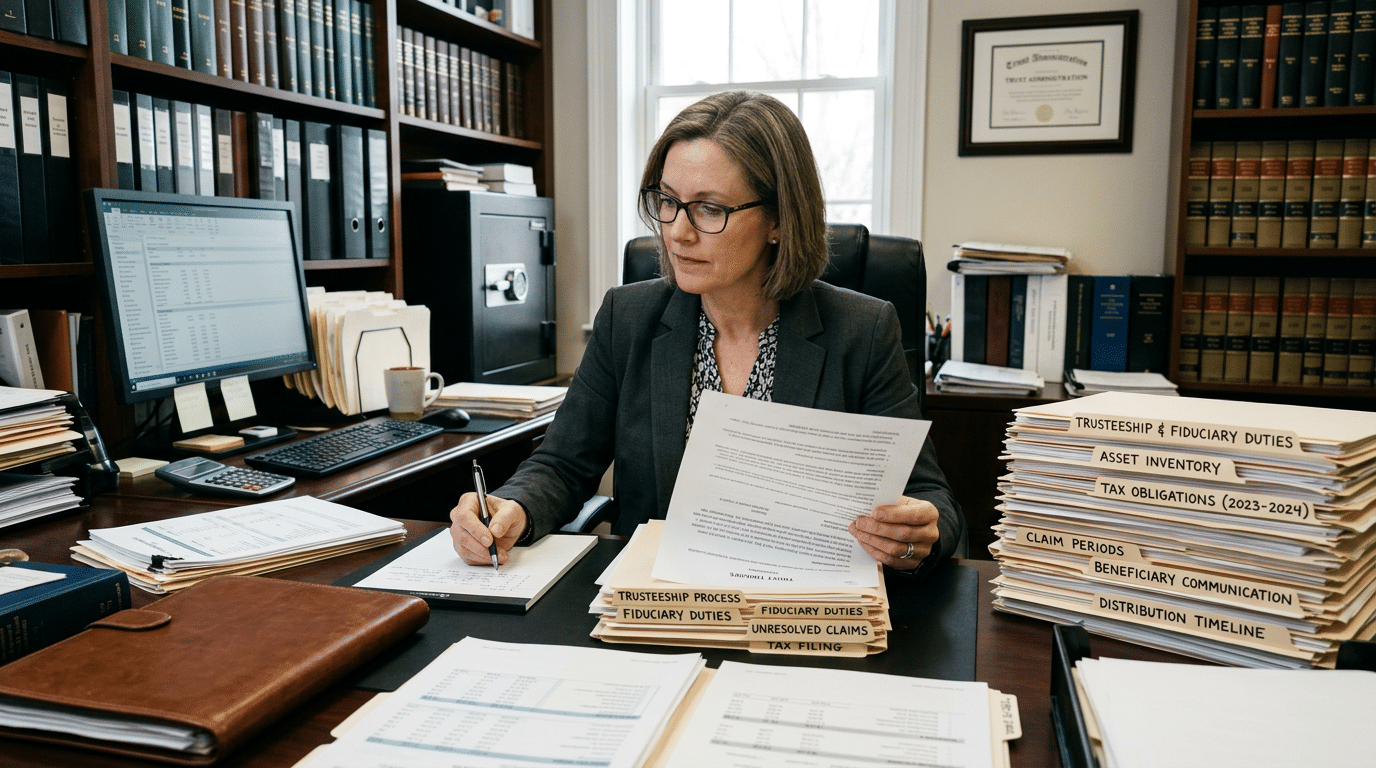
As a trust beneficiary, waiting for a distribution can become frustrating quickly. You may know that money or property has been placed in trust for your benefit, yet months can pass without receiving anything. That naturally raises an important question: how long can a trustee legally hold money before making a distribution? In New York, no single rule requires every trustee to distribute trust funds within a specific number of days or months. The answer depends mainly on the trust's language, the type of distribution involved, the work left to complete, and whether the trustee is reasonably carrying out fiduciary responsibilities.
At Bernard Law P.C., we help clients understand both sides of this issue. Beneficiaries in Suffolk County want to know when they are entitled to receive property, while trustees need enough time to identify assets, address taxes and expenses, resolve claims, and make legally appropriate distributions. A delay is not automatically improper. However, a trustee cannot simply hold trust assets indefinitely without a valid reason.
The Trust Document Usually Controls When Money Must Be Distributed
We start with the trust agreement itself. A trust may require an immediate distribution after the creator’s death, direct distributions at particular ages, provide for periodic income payments, or give the trustee discretion to decide when distributions should occur.
New York Estates, Powers and Trusts Law, or EPTL, generally requires fiduciaries to administer trusts according to the governing instrument. EPTL § 11-A-1.3 specifically recognizes that the terms of the trust control the fiduciary’s administration in matters involving principal and income.
That distinction is extremely important. A trustee who is required to distribute $250,000 to a beneficiary outright after the settlor’s death is in a very different position from a trustee authorized to distribute money only for a beneficiary’s health, education, maintenance, or support. A discretionary trust may intentionally allow the trustee to retain assets for years.
Before deciding that a trustee is improperly withholding money, we therefore need to determine whether the beneficiary actually has a present right to the distribution.
A Trustee May Need Time To Complete Trust Administration
Even when a beneficiary will ultimately receive an outright distribution, the trustee normally needs time to complete the administration process.
For example, the trustee may need to identify and value assets, obtain tax information, liquidate investments, sell real estate, resolve outstanding expenses, or determine whether money must be reserved for taxes. If the trust became irrevocable because its creator recently died, the trustee may also be coordinating the trust with the decedent’s estate.
These responsibilities can justify holding back some or all of a distribution temporarily. Trustees are fiduciaries, which means they must protect trust property rather than simply distribute everything as quickly as possible.
Under EPTL § 11-2.3, New York’s Prudent Investor Act requires trustees to manage and invest fiduciary property prudently. EPTL § 11-1.1 also grants trustees broad administrative powers necessary to manage trust property. Those responsibilities can require a trustee to retain sufficient assets to cover foreseeable obligations before distributing the balance.
A trustee who distributes everything too soon could create a different problem. If taxes, expenses, or legitimate liabilities later arise, the trustee may have insufficient funds to satisfy them.
There Is A Difference Between A Reasonable Delay And An Improper Delay
New York law does not give trustees unlimited discretion simply because administration takes time. The longer money is held, the more important it becomes for the trustee to have a legitimate explanation.
A several-month delay may be entirely reasonable where substantial assets must be collected, tax returns must be prepared, or real property must be sold. The same delay may be much harder to justify when the trust holds only cash, all expenses have been paid, and the document directs an outright distribution.
We look closely at what the trustee is actually doing during the period of delay. Is the trustee communicating with beneficiaries? Are tax issues still unresolved? Is litigation pending? Does the trust require an accounting before final distribution? Are there disputed creditor claims? Has the trustee explained why a reserve is being maintained?
A beneficiary should become concerned when there is prolonged silence, shifting explanations, unexplained refusal to provide information, or continued retention of assets after the reasons for holding them appear to have ended.
Trustees Must Treat Beneficiaries Fairly And Protect Their Interests
Trustees are not simply custodians of money. They owe fiduciary duties in administering trust assets.
New York law requires fiduciaries to consider the interests created by the trust. EPTL § 11-2.1 addresses the allocation of principal and income and directs administration with due regard for the respective interests of beneficiaries. EPTL § 11-A-1.3 also requires impartial administration when a fiduciary exercises discretion unless the trust itself permits preferential treatment.
This becomes particularly important when a trust has multiple beneficiaries. A trustee generally cannot delay one person’s distribution merely to benefit another unless the trust provides authority to do so.
Trustees must also be careful when they themselves are beneficiaries. EPTL § 10-10.1 restricts a trustee’s ability to exercise certain discretionary distribution powers in the trustee’s own favor unless statutory exceptions or appropriate trust language applies.
The central question is whether the trustee is acting consistently with the trust and fulfilling fiduciary obligations rather than using control of the money for personal leverage.
Beneficiaries Can Ask For Information And Seek Court Relief When Necessary
A beneficiary does not necessarily have to accept an unexplained delay indefinitely.
The first step is often requesting a clear explanation of what remains to be completed and when the trustee expects distributions to begin. Many disputes can be avoided when trustees communicate openly and provide reasonable information about taxes, expenses, asset sales, and administrative deadlines.
When legitimate questions remain unanswered, beneficiaries may have legal remedies. Under New York Surrogate’s Court Procedure Act § 2205, a court may require a fiduciary to provide an intermediate or final accounting. An accounting can show assets received, income earned, expenses paid, transactions completed, and distributions made.
More serious misconduct can result in additional consequences. SCPA § 711 permits applications seeking suspension or removal of certain fiduciaries for misconduct, unfitness, failure to account, or violations of trust obligations.
Removal is a serious remedy and is not appropriate merely because a beneficiary dislikes the pace of administration. However, unexplained withholding of assets combined with fiduciary misconduct may justify court involvement.
Florida Trusts Can Follow Different Statutory Rules
This issue may require additional analysis for our snowbird clients because the trust may be governed by Florida rather than New York law.
Florida Statutes § 736.0506 specifically addresses overdue mandatory distributions. It provides that a creditor or assignee of a beneficiary may reach a mandatory distribution when the trustee has failed to make it within a reasonable time after the designated distribution date, even when the trust contains a spendthrift provision.
That statute highlights why governing law matters. A New York resident may have created a Florida trust, moved between the two states, or own assets administered under different legal arrangements. We therefore review the trust agreement and governing-law provisions before determining what legal standards apply.
There Is No Automatic Six-Month Or One-Year Rule For Trust Distributions
Beneficiaries frequently hear statements such as, “The trustee has one year to distribute everything.” That is not a universal New York rule.
A trust administration may legitimately take longer than a year, particularly when it involves tax issues, closely held businesses, difficult-to-sell real estate, litigation, or complex investments. Conversely, a simple trust holding liquid assets might reasonably be administered much more quickly.
The better question is not simply how much time has passed. We look at what the trust requires, what administrative work remains, what the trustee has done, and whether the explanation for continued delay makes sense.
A trustee should be given reasonable time to perform the job correctly. A beneficiary, however, should not be left waiting indefinitely without information or justification.
Frequently Asked Questions About Delayed Trust Distributions
How Long Does A Trustee Normally Have To Make A Distribution In New York?
There is no universal statutory period that applies to every New York trust. The trust document is usually the starting point. The trustee must then have reasonable time to complete legitimate administrative tasks such as gathering assets, paying expenses, addressing taxes, and resolving claims. A straightforward trust may be ready for distribution relatively quickly, while a complex trust may require considerably more time.
Can A Trustee Hold Back Some Money For Taxes And Expenses?
Yes. A trustee may have legitimate reasons to maintain a reasonable reserve for expected taxes, professional fees, property expenses, or other trust obligations. Distributing every dollar before those matters are resolved could expose the trustee and potentially the beneficiaries to problems later. The amount retained should have a rational relationship to anticipated obligations rather than becoming an excuse to delay the entire distribution unnecessarily.
Can A Trustee Refuse To Tell Me Why My Distribution Is Delayed?
A trustee’s fiduciary obligations generally require appropriate administration and accountability. Beneficiaries should not necessarily expect daily reports, but prolonged silence regarding trust assets or distributions can raise legitimate concerns. We often recommend first requesting an explanation in writing. If meaningful information is still not provided, legal options may include seeking an accounting or other relief.
Can I Force A Trustee To Provide An Accounting In New York?
Depending on the circumstances, a beneficiary or other interested person may seek judicial relief concerning a fiduciary’s accounting. SCPA § 2205 authorizes the Surrogate’s Court to compel a fiduciary to provide an intermediate or final account under appropriate circumstances. An accounting can be particularly valuable when a beneficiary cannot determine what happened to trust assets or why distributions have been delayed.
Can A Trustee Be Removed For Refusing To Make Distributions?
Potentially, but removal is generally reserved for significant circumstances. SCPA § 711 provides grounds for seeking suspension or removal of fiduciaries in situations involving misconduct, unfitness, failure to account, or violations of fiduciary responsibilities. A simple disagreement about timing usually does not automatically justify removal. We would examine the trust terms, the reason for the delay, the trustee’s conduct, and whether the beneficiary has actually been harmed.
What If The Trust Gives The Trustee Complete Discretion Over Distributions?
A discretionary trust is different from one requiring an outright payment. When the trust gives the trustee discretion, the beneficiary may not have the right to demand a particular distribution simply because money is available. The trustee must still exercise fiduciary authority consistently with the trust’s purposes and applicable law, but the language of the trust becomes particularly important in determining the beneficiary’s rights.
Call Our Trust And Estate Planning Attorney In Shoreham For A Consultation
Questions about delayed trust distributions often require much more than counting the number of months since a death or since a trust became irrevocable. We examine the trust document, the trustee’s fiduciary responsibilities, unresolved taxes and expenses, the nature of the trust assets, and the beneficiary’s actual distribution rights. We also assist trustees who need to understand how to complete administration properly without making distributions prematurely.
Bernard Law P.C. assists individuals and families with trust planning, trust administration, estate planning, estate taxation, and related matters involving New York and Florida. Our office is located in Shoreham, New York, and we serve clients throughout Suffolk County.
If you are a beneficiary waiting for a trust distribution or a trustee who is unsure when trust assets should be distributed, we can review the trust and help you understand the legal issues involved. Call our Suffolk County estate planning attorney at Bernard Law P.C. at (631) 378-2500 to schedule a free consultation.