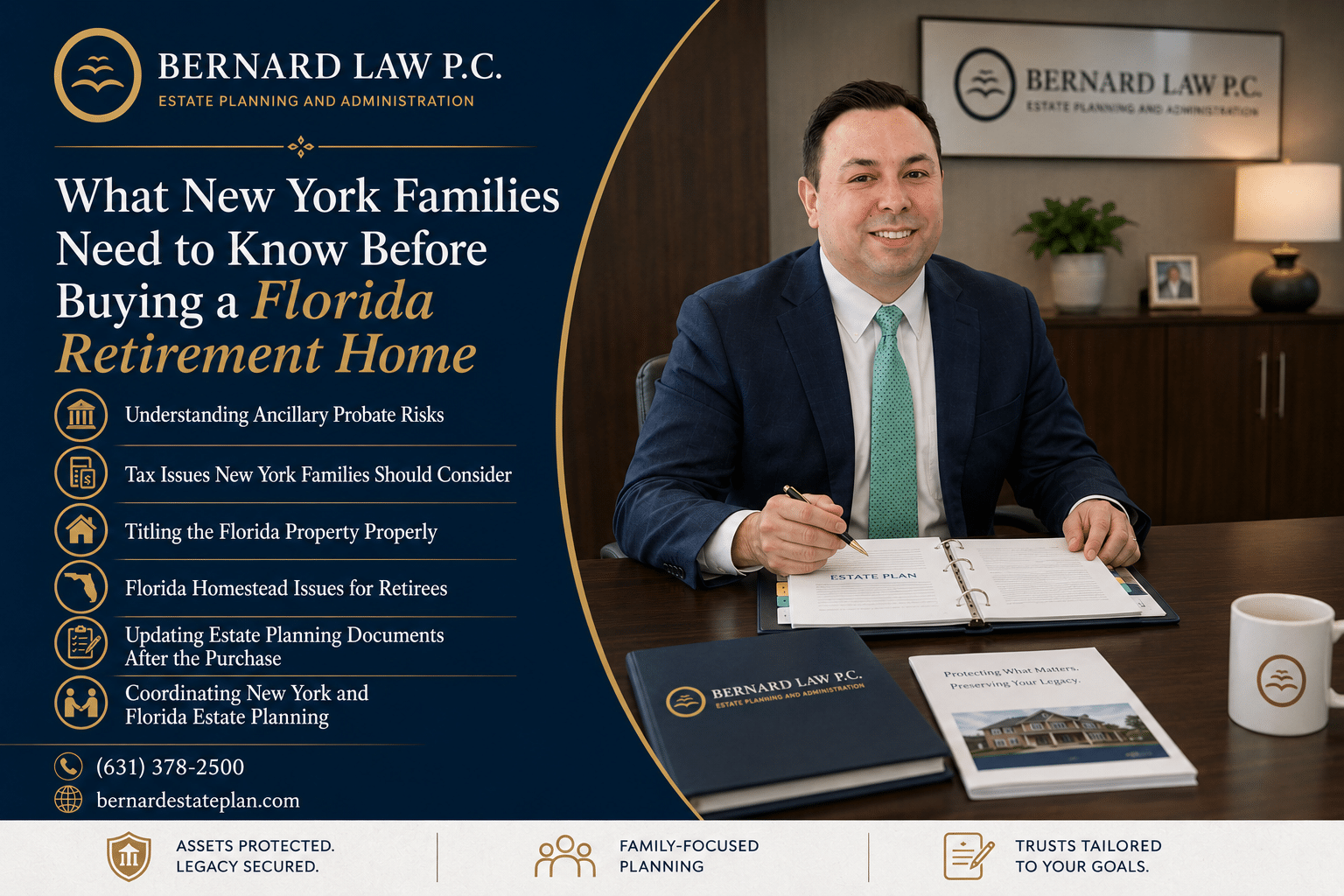
For many New York families, buying a retirement home in Florida is an exciting step. Florida’s warm weather, tax benefits, and lifestyle draw thousands of New Yorkers each year. But owning a second home in another state is more complex than just picking a property and signing papers. It can affect your estate plan, taxes, trust planning, asset protection, and how your estate is handled after you pass away. We often see clients in Hauppauge who think their New York estate plan will automatically cover a Florida property, but sometimes extra planning is needed. Learning about these legal issues before you buy can help your family avoid extra costs, delays, and problems later on.
Estate Planning Considerations Before Purchasing Florida Real Estate
Before you buy a Florida retirement home, it’s important to think about how it fits into your estate plan. Many New Yorkers already have wills, trusts, powers of attorney, and health care directives. Still, buying property in another state can bring up new planning needs.
Under New York law, a will controls the distribution of property after death, but owning real estate in multiple states may complicate estate administration. New York’s Estates, Powers and Trusts Law (EPTL) governs many aspects of estate planning and inheritance. For example, EPTL § 3-2.1 establishes the requirements for a valid New York will. While a properly drafted New York will can address Florida property, additional planning may still be beneficial.
Many families put their Florida property into a revocable living trust. This can make things easier to manage and may help avoid court proceedings after someone passes away. Trust planning is especially helpful for people who split their time between New York and Florida.
Understanding Ancillary Probate Risks
One issue many New York families do not anticipate is ancillary probate. Probate is the court-supervised process of administering a deceased person’s estate. Many New York families don’t expect to deal with ancillary probate. Probate is the court process for handling someone’s estate after they die. If a New York resident owns Florida property in their own name, their family may need to go through probate in both New York and Florida. Common strategies may include holding title through a trust, utilizing certain ownership arrangements, or coordinating estate planning documents across both states.
The right plan depends on your family’s situation, such as your marital status, assets, who you want to inherit, and your long-term goals.
Tax Issues New York Families Should Consider
Many people buy Florida retirement homes because there’s no state income tax in Florida. However, just owning a Florida property doesn’t mean you’re free from New York taxes.
New York’s residency rules are complicated. Even if you spend a lot of time in Florida, you might still count as a New York resident for taxes. Tax officials look at things like where your main home is, how much time you spend in each state, your family ties, and your finances.
Families should also be aware of New York estate tax considerations. New York imposes an estate tax under Article 26 of the New York Tax Law. Depending on the size of an estate, New York estate tax exposure may remain a concern even if a retirement home is purchased in Florida.
Proper planning before and after the purchase may help reduce potential tax consequences and avoid unintended issues for heirs.
Titling the Florida Property Properly
The manner in which a Florida retirement home is titled can have significant legal consequences.
Married couples may choose joint ownership arrangements that affect what happens upon the death of one spouse. Some ownership structures provide automatic transfer rights, while others may require probate proceedings.
Families should also consider whether the property should be owned individually, jointly, or through a trust. The decision may affect creditor protection, estate administration, and inheritance rights.
Florida law and New York law may treat ownership interests differently in certain circumstances. Coordinating property ownership with an existing estate plan can help ensure that the property passes according to your wishes.
Florida Homestead Issues for Retirees
Florida’s homestead laws are among the strongest in the country. However, these protections generally apply only under certain circumstances.
Families often assume that purchasing a Florida retirement home immediately qualifies them for all Florida homestead benefits. In reality, eligibility may depend upon residency status and other factors.
Homestead issues can affect creditor protection, property tax benefits, and inheritance rights. Before purchasing a retirement home, it is important to understand how Florida homestead laws may interact with your long-term plans and whether you intend to establish Florida as your permanent residence.
Updating Estate Planning Documents After the Purchase
Buying a Florida retirement home should trigger a review of your existing estate plan.
We frequently recommend reviewing wills, trusts, powers of attorney, health care directives, beneficiary designations, and related documents whenever significant assets are acquired.
Under New York General Obligations Law Article 5, powers of attorney play an important role in managing financial matters if incapacity occurs. Ensuring these documents remain current can help protect your interests if unexpected circumstances arise.
Families should also review trust funding and asset ownership to ensure the new property is properly integrated into the overall estate planning strategy.
Coordinating New York and Florida Estate Planning
The most effective planning generally involves considering both New York and Florida laws together rather than treating them as separate issues.
Every family has unique goals. Some clients want to minimize taxes. Others want to simplify administration for children. Many seek to avoid unnecessary court proceedings while preserving flexibility during retirement.
A coordinated estate plan can help address these concerns while protecting assets and ensuring that your wishes are carried out efficiently. By addressing these matters before purchasing a Florida retirement home, families can often avoid costly complications later.
Real Estate Estate Planning FAQs
Does Buying A Florida Retirement Home Automatically Make Me A Florida Resident?
No. Purchasing a home in Florida does not automatically change your residency status for legal or tax purposes. Residency determinations often involve numerous factors, including where you spend your time, where you vote, where you maintain your driver’s license, and other indicators of permanent residence. Many New Yorkers own Florida homes while remaining New York residents.
Will My Existing New York Will Cover My Florida Property?
In many situations, yes. A properly drafted New York will can address Florida real estate. However, that does not necessarily prevent probate issues or ancillary probate proceedings. We often recommend reviewing estate planning documents after acquiring out-of-state real estate to determine whether additional planning would be beneficial.
What Is Ancillary Probate?
Ancillary probate is a secondary probate proceeding conducted in a state where a deceased person owned real estate. For example, if a New York resident dies owning Florida property in his or her individual name, family members may need to complete probate proceedings in both New York and Florida. This can increase costs and delay distributions.
Should I Put My Florida Retirement Home Into A Trust?
The answer depends on your circumstances. Many families use revocable living trusts to simplify estate administration and potentially avoid probate complications involving out-of-state real estate. Trust planning should be evaluated based on your overall estate, family structure, and long-term objectives.
Can A Florida Home Help Reduce New York Taxes?
Not automatically. Simply owning Florida property does not eliminate New York tax obligations. New York residency rules remain important. Families considering a permanent move to Florida should carefully evaluate residency requirements and tax implications before making assumptions about potential savings.
Do Married Couples Need Special Planning For Florida Property?
Often, yes. The way a married couple takes title to property can affect inheritance rights, probate procedures, and asset protection considerations. Reviewing ownership options before closing on the property can help avoid future complications.
Should Estate Planning Documents Be Updated After Purchasing A Retirement Home?
Yes. Acquiring significant real estate is usually an appropriate time to review estate planning documents. Wills, trusts, powers of attorney, and other documents should be evaluated to ensure they properly address the new asset and continue to reflect your goals.
What Happens If I Become Incapacitated While Staying In Florida?
Without proper planning, managing property and financial affairs can become more difficult. Powers of attorney and related incapacity planning documents are designed to help ensure someone you trust can act on your behalf if necessary. Reviewing these documents before retirement is often advisable.
Call Our Hauppauge Trust Attorney To Discuss Your Estate Plan Options
Purchasing a Florida retirement home can create valuable opportunities, but it can also raise important estate planning, trust administration, tax, and property ownership issues. Careful planning before you buy can help protect your family, reduce future complications, and ensure your assets pass according to your wishes. At Bernard Law P.C., we help New York families create customized estate plans that address the unique challenges of owning property in multiple states.
If you are considering purchasing a Florida retirement home or already own property in Florida, Bernard Law P.C. can help you evaluate the estate planning and trust considerations that may affect your family. Our office is located in Hauppauge, New York, and we proudly serve clients throughout Suffolk County. Call our Hauppauge estate plan lawyer at Bernard Law P.C. at (631) 378-2500 to schedule a free consultation.