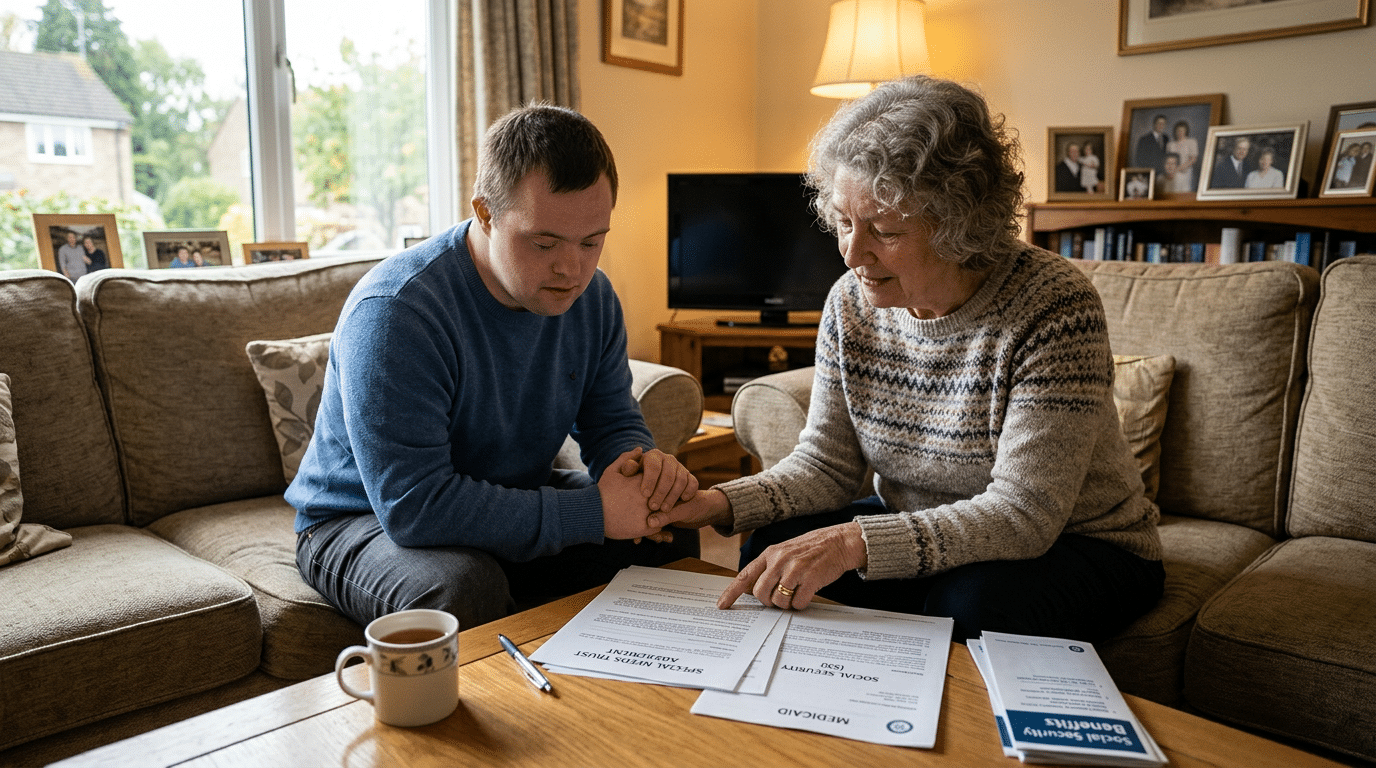
If you want to leave money or property to a loved one with a disability, think carefully about how you do it. Even a well-meaning gift can cause problems if the person receives government benefits like Supplemental Security Income or Medicaid. Giving an inheritance directly may increase their resources and affect eligibility for these programs. This does not mean you should avoid leaving assets to someone with a disability. Instead, your estate plan should ensure the inheritance improves their quality of life without risking important benefits.
At Bernard Law P.C., we help families in Shoreham and across Suffolk County plan ahead for these issues. One helpful tool is a special needs trust, sometimes called a supplemental needs trust in New York. If set up and managed correctly, this trust can hold assets for your loved one and let the trustee use them for extra needs. Getting the details right is important, because mistakes in the trust or how money is given out can still cause problems with benefits.
Why An Outright Inheritance Can Create Problems For A Beneficiary
Not all government benefits are based on financial need. Social Security Disability Insurance, for example, is generally tied to work history rather than an individual’s asset level. Supplemental Security Income and many forms of Medicaid eligibility, however, are means-tested programs. Assets owned directly by the beneficiary may therefore affect eligibility.
Many families do not realize this estate planning issue until it is too late. For example, if parents leave $200,000 directly to an adult child with a disability, the money may help financially but also puts a large amount in the child’s name. The family might then have to deal with the consequences after the inheritance is already given.
A special needs trust solves this problem in a different way. Instead of giving property directly to the person, the assets are held in a trust and managed by a trustee. The beneficiary does not have full control over the trust money. This setup helps keep access to benefits while still providing extra resources for the beneficiary’s needs.
New York Law Specifically Recognizes Supplemental Needs Trusts
New York Estates, Powers and Trusts Law § 7-1.12 provides the statutory framework for supplemental needs trusts for individuals with severe and chronic or persistent disabilities. The statute recognizes a trust intended to supplement rather than replace or diminish government benefits or assistance that the beneficiary may otherwise receive.
This idea is key. A well-written supplemental needs trust does not replace programs like Medicaid or SSI. Instead, it is meant to improve the beneficiary’s life by paying for extra goods and services that those programs do not cover.
Trust funds may be used for education, transportation, recreation, technology, certain medical or dental expenses, personal services, and other quality-of-life needs, depending on the trust terms and benefit rules. The trustee must consider how each distribution could affect the beneficiary’s eligibility or monthly benefit amount.
That is why we don't view a special needs trust as a document you can create and forget. The drafting and administration must work together.
First-Party And Third-Party Special Needs Trusts Are Very Different
One of the most important distinctions is the source of the money placed into the trust. A third-party special needs trust is generally funded with assets belonging to someone other than the beneficiary. Parents or grandparents, for example, may establish a trust for a child or grandchild and direct that an inheritance pass into that trust rather than directly to the beneficiary. Because the assets never belonged to the beneficiary, this structure can provide significant flexibility in determining what happens to remaining trust property after the beneficiary’s death.
A first-party special needs trust is different because it contains the beneficiary’s own assets. This situation may arise after a personal injury settlement, an inheritance already received outright, or other funds belonging to the person with a disability.
Federal law under 42 U.S.C. § 1396p(d)(4)(A) permits qualifying first-party special needs trusts for disabled individuals under age 65, subject to specific requirements. One critical requirement is Medicaid reimbursement. Upon the beneficiary’s death, the state may be entitled to reimbursement from remaining trust assets for Medicaid benefits paid on the beneficiary’s behalf.
That payback requirement is a major reason families should plan before transferring assets outright whenever possible.
The Trustee’s Decisions Can Affect Government Benefits
Creating the trust is only the beginning. How the trustee makes distributions can be equally important.
Supplemental Security Income has detailed rules governing whether trust property or trust distributions are treated as resources or income. Direct cash payments to an SSI recipient can reduce SSI benefits. Certain payments involving shelter may also affect the monthly SSI amount, even when the trust itself is not treated as the beneficiary’s countable resource.
By contrast, payments made directly for many goods and services may have a different effect. The Social Security Administration evaluates trusts and distributions under federal resource and income rules, so trustees need to understand the consequences before writing checks or transferring money.
A trustee who simply gives the beneficiary cash whenever requested may undermine the planning that the trust was intended to accomplish. We therefore encourage families to consider not only whom they trust personally, but also whether that person can responsibly administer a trust that interacts with public benefit rules.
Professional assistance may also be appropriate when the trustee is unsure how a proposed distribution could affect eligibility.
Families Should Plan Before An Inheritance Is Received
The best time to address special needs planning is usually before money passes to the beneficiary. Parents can incorporate a third-party special needs trust into their own estate plan so that a child’s inheritance passes directly into the trust. They should also review beneficiary designations on retirement accounts, life insurance policies, and other assets. Naming a person with a disability directly on those accounts can defeat the purpose of carefully drafted trust provisions elsewhere in the plan.
The same issue applies to grandparents and other relatives. One family member may create a thoughtful special needs plan while another leaves the beneficiary a substantial outright inheritance.
For New York families who also maintain property or significant ties to Florida, multistate planning deserves additional attention. Federal SSI and Medicaid trust rules create much of the foundation for special needs planning, but state trust and Medicaid administration rules can differ. Florida’s trust laws also recognize supplemental needs trust concepts in certain trust administration settings. Families dividing their lives between New York and Florida should make sure their planning is coordinated rather than assuming a document prepared in one state automatically addresses every issue in the other.
A Special Needs Trust Can Protect More Than Benefits
Government benefit preservation is a primary reason for establishing a special needs trust, but it is not the only advantage. The trust can provide long-term financial management for a beneficiary who may not be able to manage a substantial inheritance independently. It can also allow parents to provide detailed instructions concerning how assets should be managed and used throughout the beneficiary’s lifetime.
Most importantly, special needs planning gives families an opportunity to think beyond the inheritance itself. The goal is not simply to transfer money. It is to create a structure that supports the beneficiary’s housing, care, independence, security, and quality of life while preserving access to programs that may remain essential for decades.
For families with a loved one who has a disability, this type of planning should be addressed as part of the estate plan rather than after an inheritance creates an unexpected problem.
Frequently Asked Questions About Special Needs Trusts In New York
What Is A Special Needs Trust?
A special needs trust is a trust designed to hold and manage assets for a person with a disability while reducing the risk that those assets will interfere with eligibility for means-tested government benefits. New York Estates, Powers and Trusts Law § 7-1.12 refers to these arrangements as supplemental needs trusts and establishes requirements for qualifying trusts.
The trustee controls trust assets and makes distributions according to the trust terms. The beneficiary generally does not have unrestricted authority to demand or withdraw the trust principal. This structure can allow the trust to supplement government assistance rather than simply replacing it.
Can I Leave Money Directly To A Child Who Receives SSI Or Medicaid?
You can, but doing so may create significant benefit issues. An outright inheritance becomes an asset belonging directly to the beneficiary. Depending on the program, that increase in resources may affect eligibility.
A better planning approach may be to direct the inheritance into a properly drafted third-party special needs trust. That allows the inheritance to benefit your child without automatically placing the entire amount under the child’s unrestricted control.
What Is The Difference Between A First-Party And Third-Party Special Needs Trust?
The primary difference is who originally owns the assets.
A third-party trust contains property belonging to another person, such as a parent or grandparent. A first-party trust contains assets belonging to the beneficiary with a disability.
Qualifying first-party trusts are subject to federal requirements under 42 U.S.C. § 1396p(d)(4)(A), including Medicaid reimbursement from remaining assets after the beneficiary’s death. Properly structured third-party trusts generally do not carry the same federal Medicaid payback requirement because the assets did not belong to the beneficiary.
Can A Special Needs Trust Pay For Housing?
Potentially, yes, but housing payments require careful consideration for an SSI recipient. Social Security rules may treat certain shelter payments as support that reduces the beneficiary’s SSI payment.
That does not automatically mean a trust should never pay housing expenses. In some circumstances, accepting a reduction in SSI may still make financial sense if the trust can significantly improve the beneficiary’s living conditions. The trustee should understand the consequences before making the distribution.
Who Should Serve As Trustee?
The trustee should be trustworthy, organized, financially responsible, and capable of understanding the interaction between trust distributions and government benefits.
A parent may initially think another family member is the obvious choice, but personal familiarity is not the only consideration. The trustee may need to maintain records, communicate with benefit agencies, manage investments, approve expenses, and make decisions that affect eligibility. Some families use an individual trustee, professional trustee, or a combination of the two depending on the size and complexity of the trust.
Can Grandparents Leave Money To A Special Needs Trust?
Yes. In fact, coordinating grandparents and other relatives with the estate plan can be extremely important.
A parent may establish an excellent third-party special needs trust, only for a grandparent to accidentally name the beneficiary directly in a will, life insurance policy, or investment account. Families should make sure relatives who intend to leave significant assets understand how those gifts should be structured.
Call Our Special Needs Trust Planning Attorney In Shoreham Today
Planning for a loved one with a disability requires more than deciding who should receive an inheritance. We need to consider how the inheritance will be owned, who will manage it, how distributions will be made, and whether the plan could affect SSI, Medicaid, or other important benefits.
At Bernard Law P.C., we help individuals and families create estate plans tailored to their circumstances, including special needs trusts, wills, other trusts, beneficiary planning, and multistate estate planning concerns involving New York and Florida.
If you have a child, grandchild, or other loved one with a disability, planning before an inheritance occurs can make an enormous difference. Bernard Law P.C. can help you evaluate whether a special needs trust should be included in your estate plan and how other assets and beneficiary designations should coordinate with that trust.
Bernard Law P.C. is located in Shoreham, New York, and serves clients throughout Suffolk County. Call our Suffolk County estate planning attorney at Bernard Law P.C. at (631) 378-2500 to schedule a free consultation, and let’s discuss how your estate plan can provide for a loved one while helping protect access to important government benefits.