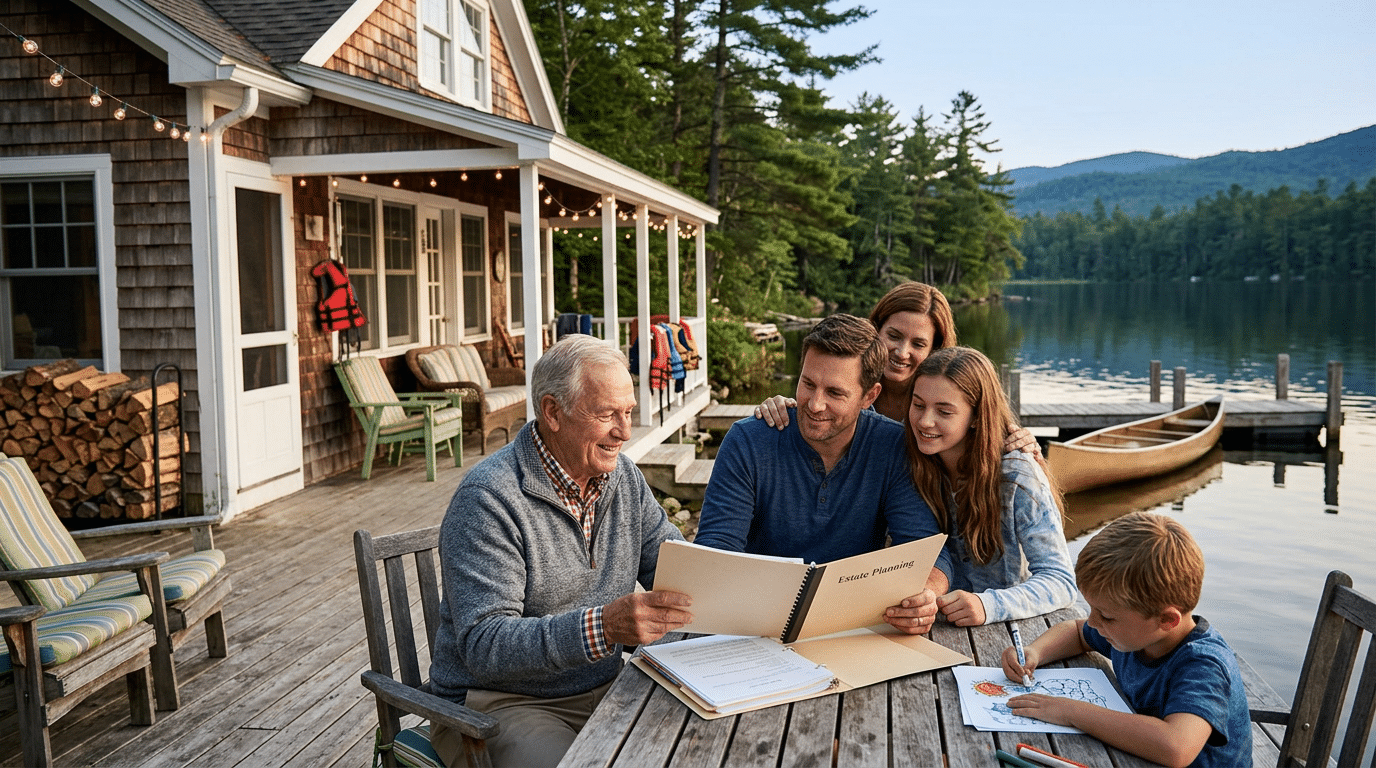
A family vacation home often means much more than its market value. It might be where children spent their summers, where grandchildren gathered for holidays, and where family memories were made. However, keeping that home in the family can be challenging if the estate plan simply divides it among several children. Issues like expenses, repairs, scheduling, taxes, and decisions about selling can lead to disagreements. If keeping the vacation home is important, we recommend making sure the estate plan covers how the home will be owned, managed, funded, and used in the future.
At Bernard Law P.C., we work with families in Hauppauge and across Suffolk County to address these concerns before problems arise. Planning is especially important for New York residents who own second homes in places like the Hamptons, the Adirondacks, or Florida. A well-designed estate plan does more than say who gets the property—it can set up a practical way to keep the home in the family.
Simply Leaving The Vacation Home To Your Children May Not Be Enough
Imagine parents leave a vacation home equally to their three adult children. While this might seem fair, in reality, each child may have different financial situations and different ideas about what should happen to the property.
One child might use the home often and want to keep it forever. Another could live far away and rarely visit. A third might need money and want to sell. At the same time, costs like taxes, insurance, utilities, and repairs still need to be covered. Even siblings who get along well can disagree when money and shared property are involved.
A will can transfer ownership, but it does not set up a detailed plan for years of shared ownership. New York Estates, Powers and Trusts Law § 3-2.1 explains the formal steps for making a valid will. While the estate plan can say who gets the property, families should also consider what happens after the initial transfer.
We encourage clients who want to keep a vacation home in the family to think about what will happen five, ten, or even twenty years after they are gone. Good planning should cover not just inheritance, but also the practical details of ongoing ownership.
A Trust Can Create Rules For Preserving The Property
A trust can provide a more organized way to keep a vacation home in the family for future generations. Instead of giving direct ownership to several people, the property can be held and managed by a trust with clear rules.
New York Estates, Powers and Trusts Law § 7-1.17 establishes execution requirements for lifetime trusts, while EPTL § 7-1.18 addresses trust funding. The funding requirement is particularly important with real estate because creating a trust document without properly transferring the intended property into it may defeat the planning objective.
The trust agreement can address issues that an outright inheritance often leaves unanswered. It may establish who has the right to use the property, how scheduling decisions are made, which expenses are paid by the trust, when beneficiaries must contribute toward expenses, and circumstances under which the property may eventually be sold.
This planning can also extend beyond children to grandchildren and later generations. Instead of every generation inheriting progressively smaller fractional interests in the property, the trust may provide continuity of ownership and administration.
The trustee’s role must also be considered carefully. Under EPTL § 11-1.1, New York fiduciaries have various statutory powers concerning the management of estate and trust property. EPTL § 11-2.3 also establishes New York’s prudent investor rule and imposes important responsibilities on trustees managing fiduciary assets. The trust therefore needs both thoughtful terms and an appropriate person or institution capable of carrying them out.
Plan For The Cost Of Keeping The Home
One issue families frequently underestimate is the future cost of maintaining a vacation property. Preserving a $1 million vacation home does not help the next generation if they cannot afford to keep it.
Property taxes, homeowners insurance, maintenance, landscaping, utilities, association charges, and major repairs may continue indefinitely. Eventually, the home could require a new roof, HVAC system, seawall, hurricane repairs, or substantial renovations.
A thoughtful estate plan can consider whether additional assets should be reserved to help support the property. Depending on the family’s circumstances, funds may be placed in trust and managed together with the residence. This can reduce the pressure on beneficiaries to continually contribute personal funds simply to retain a property their parents wanted them to enjoy.
We also discuss whether preservation is actually realistic. Sometimes the better plan includes a mechanism allowing a sale when keeping the property no longer makes financial or practical sense. Preserving family harmony can ultimately be more important than requiring descendants to retain real estate indefinitely.
New York Families With Florida Vacation Homes Require Additional Planning
Vacation-home planning becomes more complicated when the property is located outside New York. This is particularly relevant to the many New York families who maintain homes in Florida.
Real estate is generally subject to important laws of the state where it is located. If a New York resident dies owning Florida property individually, the family may face additional Florida estate administration procedures. Trust ownership may sometimes be incorporated into a plan intended to simplify the transfer and administration of multistate real estate.
Florida homestead law also deserves particular attention when a Florida property becomes an owner’s permanent residence rather than merely a vacation residence. Florida Statutes § 732.4015 restricts the devise of protected homestead property in certain circumstances involving a surviving spouse or minor child. Florida Statutes § 736.1109 specifically addresses homestead protections involving testamentary and revocable trusts.
This is why we do not recommend treating a Florida residence as merely another line item on a New York asset list. The property’s use, ownership, residency implications, family circumstances, and long-term purpose should all be considered when coordinating a New York and Florida estate plan.
Build A Plan That Preserves The Family Rather Than Just The Property
When clients tell us they want a family home to remain in the family, we ask them to think about what that statement really means. The objective is usually not simply preserving a particular deed. It is preserving the opportunity for children and grandchildren to enjoy the property without creating financial hardship or damaging family relationships.
That requires planning for management, expenses, decision-making authority, changing family circumstances, and an eventual exit strategy. No legal document can guarantee that every descendant will always agree, but a carefully designed estate plan can reduce uncertainty and establish rules before disagreements arise.
For families with valuable or emotionally significant vacation homes, individualized planning can make the difference between a property that becomes a lasting family legacy and one that becomes the center of a future dispute.
Call Our Suffolk County Estate Planning Attorney For A Free Consult
A family vacation home may represent decades of memories, but preserving it for future generations requires more than simply naming beneficiaries in a will. We can help you consider how the property should be owned, who should manage it, how expenses should be paid, what happens when family members disagree, and how New York and Florida law may affect your plan.
At Bernard Law P.C., we create individualized estate plans based upon each family’s assets, relationships, priorities, and long-term objectives. Our office is located in Hauppauge, New York, and we serve clients throughout Suffolk County, including families with homes and other assets in Florida.
If you own a vacation home and want to preserve it for your children, grandchildren, or future generations, we can help you determine how that goal should be incorporated into your estate plan. Thoughtful planning today can provide future family members with clear rules, adequate financial support, and a better opportunity to enjoy the property as you intended. Call our Suffolk County estate planning lawyer at Bernard Law P.C. at (631) 378-2500 to schedule a free consultation.