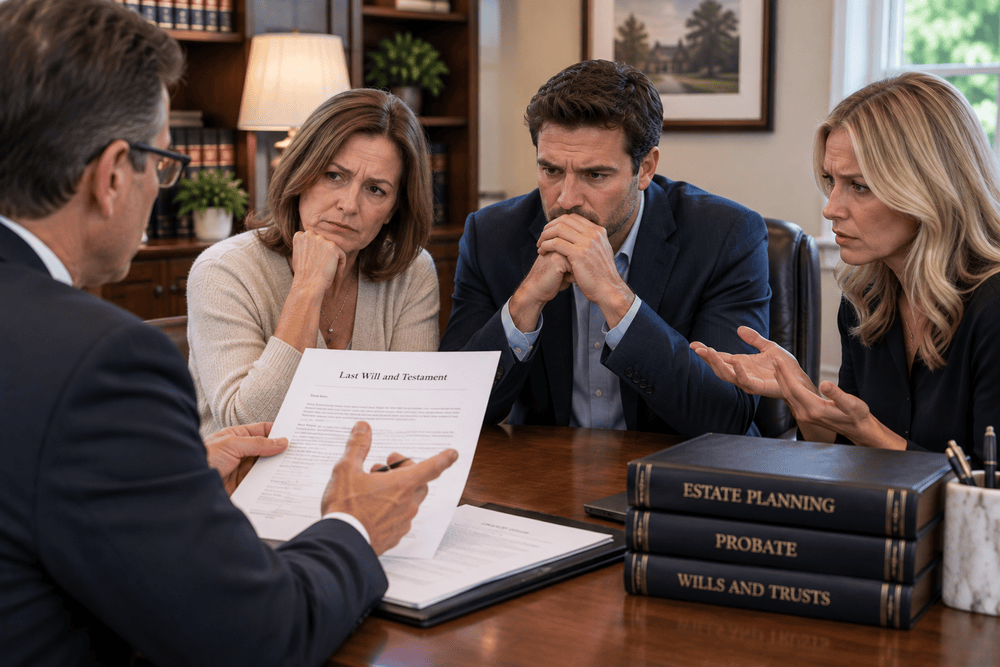
In New York, it is possible to contest a will after someone passes away. However, simply disagreeing with the inheritance is not enough to overturn the will. To challenge a will, a person usually needs a legal interest in the estate and must have a valid reason recognized by the court. These cases often depend on specific facts, such as how the will was created, whether the person signing it understood their actions, and if anyone influenced the estate plan inappropriately. Families often worry when a new will changes previous plans, leaves out a close relative, or gives a large inheritance to someone who became close to the deceased later in life. While these situations may deserve a closer look, they do not automatically mean the will is invalid.
At Bernard Law P.C., we help families in Suffolk County understand New York’s rules when there are questions about a will’s validity. Contesting a will can impact the whole estate process, cause delays, raise legal costs, and increase family conflict. That’s why we encourage both beneficiaries and executors to learn the legal standards before deciding if an unusual estate plan is invalid or cannot be challenged.
Who Has The Right To Contest A Will In New York?
Not everyone who disagrees with a will has the right to challenge it. New York Surrogate’s Court Procedure Act § 1410 provides that a person whose interest in the deceased person’s property or estate would be adversely affected by admitting the will to probate may file objections.
In practical terms, this often includes a person who would inherit more if an earlier will controlled or if the deceased person had died without a valid will. A disappointed friend, distant relative, or other person who would receive nothing regardless of the outcome may lack the necessary legal interest to object.
Timing is also important. SCPA § 1410 establishes deadlines for filing objections. When examinations are conducted under SCPA § 1404, objections generally must be filed within 10 days after those examinations are completed unless the parties agree otherwise or the court establishes another deadline.
Since these deadlines can come up quickly during probate, a family member who gets a notice from Surrogate’s Court and has real concerns about the will should not ignore the paperwork. Delaying too long can make it harder to raise objections.
Lack Of Testamentary Capacity Can Be Grounds For A Will Contest
A person must possess sufficient mental capacity to make a valid will. Under New York Estates, Powers and Trusts Law § 3-1.1, a person who is at least 18 years old and of sound mind and memory may dispose of property by will.
Questions about capacity often come up if the person who died had dementia, a serious illness, or other mental challenges near the time they signed the will. Still, just having a medical diagnosis does not automatically make a will invalid. What matters is the person’s mental capacity when they signed the will.
Evidence can include medical records, statements from the lawyer who wrote the will, what witnesses saw, conversations with family, and details about the person’s understanding of their assets and family ties.
New York Surrogate’s Court Procedure Act § 1408 requires the court to be satisfied that the testator was competent and that the will was validly executed before admitting it to probate. This gives the Surrogate’s Court an important gatekeeping role even before formal objections are considered.
Undue Influence, Fraud, And Duress May Also Be Raised
Another common concern is whether someone pressured or manipulated the deceased person into changing an estate plan.
Undue influence is more than persuasion, advice, or emotional closeness. New York courts generally look for influence serious enough to overcome the testator’s independent judgment and substitute another person’s wishes for the testator’s own wishes.
These disputes frequently involve a vulnerable older adult, increasing dependence on a caregiver or relative, isolation from other family members, and a significant change in the estate plan that benefits the person accused of exercising influence. No single fact necessarily proves undue influence. Courts usually look at the entire relationship and surrounding circumstances.
Fraud may also provide grounds for objection when someone knowingly makes a false representation that causes the testator to create or change a will. Duress involves wrongful pressure that deprives the testator of genuine freedom of choice. These allegations require evidence, not merely suspicion or family disagreement.
A Will Can Be Challenged For Improper Execution
New York has specific formal requirements for executing a will. EPTL § 3-2.1 generally requires a written will to be signed by the testator and properly witnessed in accordance with statutory requirements.
Questions sometimes arise about whether the required witnesses were present, whether the testator acknowledged the signature, whether the witnesses understood that they were witnessing a will, or whether the statutory procedures were followed.
This is one reason professionally supervised will executions can become important if a contest occurs years later. The attorney who prepared the document and the attesting witnesses may provide evidence concerning what happened during the signing.
Under SCPA § 1404, certain interested parties may examine the attesting witnesses and the person who prepared the will before deciding whether formal objections should be filed. These examinations can help determine whether there is genuine evidence supporting a contest rather than mere dissatisfaction with the inheritance.
A Surprising Inheritance Does Not Automatically Make A Will Invalid
Families sometimes assume that a will must be invalid because its terms seem unfair. New York law generally allows people substantial freedom to decide who should inherit their property, subject to certain statutory rights such as those protecting surviving spouses.
A parent may leave unequal amounts to children. Someone may favor one relative who provided years of assistance. A testator may even exclude certain family members entirely. Those decisions may be emotionally difficult, but an unequal inheritance does not by itself establish incapacity, undue influence, fraud, or improper execution.
The legal issue is whether the will represents the genuine and legally valid wishes of the person who signed it.
That distinction is important because will contests should be based on evidence concerning the validity of the document, not simply the fairness of its distribution.
New York And Florida Snowbirds Can Present Additional Issues
Will disputes can become more complicated when the deceased person divided time between New York and Florida. One question may involve domicile at death. Another may concern where the will was signed and whether it satisfies applicable execution requirements. New York EPTL § 3-5.1 provides rules concerning wills connected with another jurisdiction and can allow New York probate of certain wills executed according to the law of New York, the jurisdiction where the will was executed, or the jurisdiction where the testator was domiciled.
For snowbird families, determining which state’s law applies may therefore become part of the probate analysis. Property located in multiple states can also create additional administration proceedings.
We believe estate planning for snowbirds should anticipate these issues before a dispute ever arises. Coordinated New York and Florida planning can make a significant difference when family members later have questions about a will’s validity or administration.
Will Contest Frequently Asked Questions
How Long Do You Have To Contest A Will In New York?
The deadline depends on the procedural posture of the probate proceeding. Under SCPA § 1410, objections ordinarily must be filed by the return date established by the court. When examinations are conducted under SCPA § 1404, objections generally must be filed within 10 days after those examinations are completed unless another deadline is established. Because probate deadlines can move quickly, anyone considering an objection should address the issue promptly.
Can A Child Contest A Parent’s Will Because They Were Left Out?
A child may have standing to challenge a will if admitting the will to probate adversely affects that child’s inheritance rights. However, being excluded is not itself a legal ground for invalidating the will. The child generally must establish a recognized basis such as lack of testamentary capacity, undue influence, fraud, duress, or improper execution.
What Evidence Is Used To Prove Undue Influence?
Evidence can include the testator’s physical and mental condition, dependence on the beneficiary, isolation from family members, the beneficiary’s involvement in arranging the estate plan, communications surrounding the execution, and significant changes from prior wills. Courts examine the circumstances as a whole rather than relying upon a single suspicious fact.
Can Dementia Automatically Invalidate A Will?
No. A diagnosis of dementia does not automatically mean a person lacked testamentary capacity. The central issue is whether the testator possessed sufficient mental capacity at the time the will was signed. Someone may experience cognitive decline and still have periods in which they are legally capable of making testamentary decisions.
What Happens During An SCPA 1404 Examination?
SCPA § 1404 allows certain interested parties to question witnesses connected with the will before filing formal objections. This may include the attesting witnesses and the attorney who prepared the will. The purpose is to obtain information concerning the execution of the document, testamentary capacity, and other issues that may affect whether there is a valid basis for contesting probate.
Does A No-Contest Clause Prevent Someone From Investigating A Will?
Not necessarily. New York EPTL § 3-3.5 limits the effect of certain no-contest provisions. The statute specifically protects several forms of conduct, including certain preliminary examinations under SCPA § 1404, from automatically causing a beneficiary to forfeit an inheritance. However, no-contest clauses require careful review because their consequences depend on the circumstances.
What Happens If A Will Contest Is Successful?
The result depends on the basis for the challenge and whether another valid testamentary document exists. An earlier will may control if the challenged will is denied probate. If no valid prior will exists, some or all of the estate may pass according to New York intestacy law.
Can An Executor Defend The Will Against A Challenge?
Yes. The nominated executor or another proponent of the will may participate in defending its validity. The estate may need to address witness testimony, medical evidence, attorney records, and other evidence concerning the circumstances surrounding the will’s execution.
Call Bernard Law P.C. For Your Free Estate Planning Consultation
A will contest can affect far more than who ultimately receives an inheritance. It can delay estate administration, increase expenses, place fiduciaries under additional scrutiny, and intensify disagreements within a family. We help clients evaluate concerns involving testamentary capacity, undue influence, improper execution, fraud, contested probate proceedings, and other estate litigation issues under New York law.
At Bernard Law P.C., we also understand the additional concerns that can arise for snowbirds and families with connections to both New York and Florida. Careful legal analysis can help determine whether a genuine basis exists to challenge a will or whether the document should be defended against objections.
If you have questions about contesting a will, defending a will, probate, estate administration, or another estate planning matter, Bernard Law P.C. can help you understand the legal issues affecting your family. Call our Suffolk County estate lawyer at Bernard Law P.C. at (631) 378-2500 to schedule a free consultation and discuss your estate planning, probate, or estate litigation concerns.