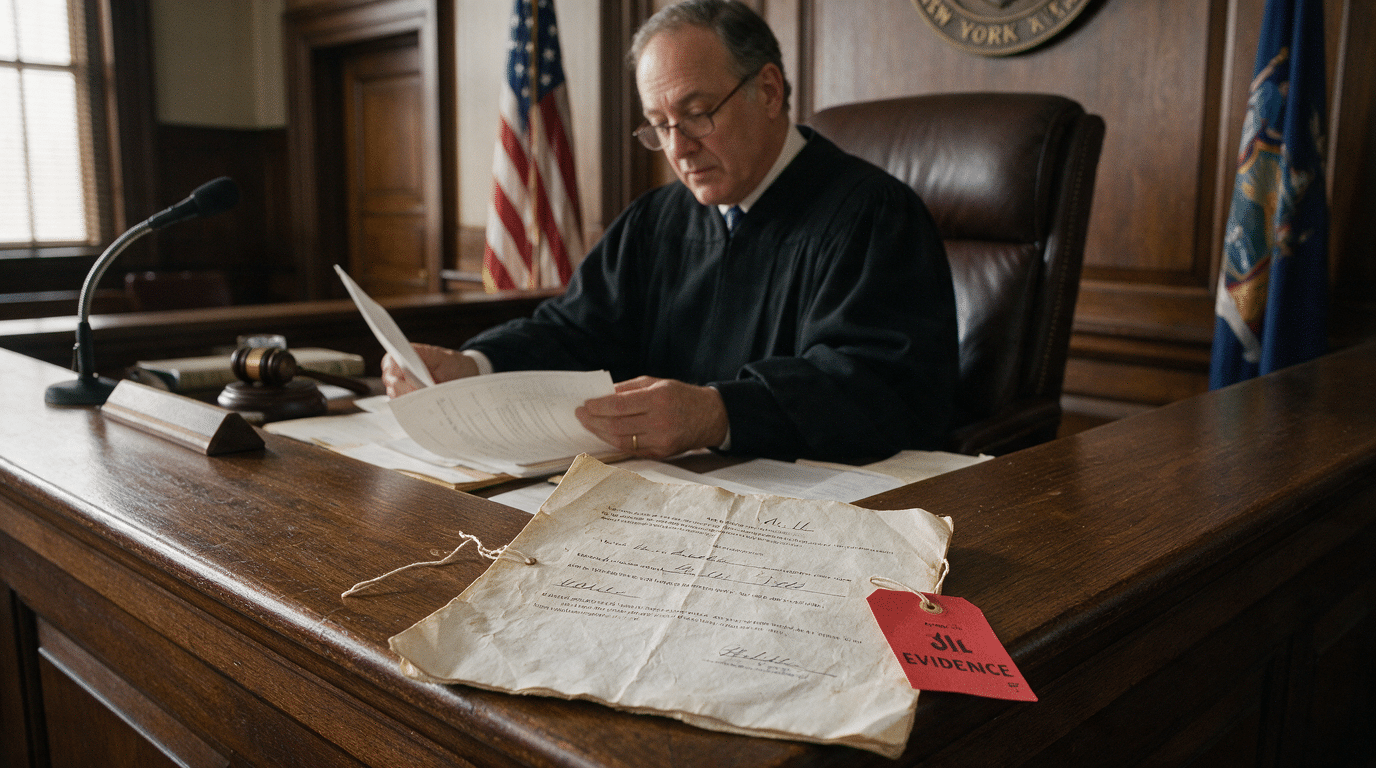
A will is a key part of any estate plan because it explains how someone wants their property divided after death and names who will handle the estate. But just having a document called “Last Will and Testament” does not mean a New York Surrogate’s Court will accept it. New York has strict rules about how a will must be signed, witnessed, and made, and it must be free from pressure or fraud. If any of these rules are not followed, the will could be challenged or even rejected by the court. We often remind clients that writing the will correctly and following the right steps is just as important as what the will says.
At Bernard Law P.C., we help people in Shoreham and across Suffolk County understand how New York law affects wills and other estate planning documents. We also assist clients with ties to Florida, including snowbirds, since documents from different states can bring up extra questions. A good estate plan should make things clearer, not more confusing.
A Will That Does Not Meet New York’s Execution Requirements Can Be Challenged
New York law is very specific about how most wills must be executed. Under Estates, Powers and Trusts Law § 3-2.1, a will generally must be in writing, signed at the end by the testator, and witnessed by at least two attesting witnesses. The testator must sign in the witnesses’ presence or acknowledge the signature to them and must declare that the document is the testator’s will. The witnesses must also sign within the statutory time period.
These rules might seem technical, but they are very important. Even if someone clearly writes who should get their estate, the will can still have major problems if it was not signed and witnessed correctly.
For example, problems can come up if only one person witnessed the will, if the person making the will did not confirm their signature, or if the witnesses did not realize they were signing a will. The Surrogate’s Court must be sure the will was properly signed and that the person was competent and not pressured. SCPA § 1408 requires the court to look at these details before accepting the will.
Lack Of Testamentary Capacity Can Affect Whether A Will Is Valid
A person must possess testamentary capacity when the will is executed. This does not necessarily mean that the person must be in perfect physical or mental health. Someone may be elderly, ill, or experiencing some cognitive decline and still possess sufficient capacity to make a valid will.
The key issue is whether the testator understood, in a general way, the nature of making a will, the property being disposed of, and the people who would ordinarily be considered the natural objects of the person’s bounty.
Capacity disputes frequently arise when a will is signed late in life or shortly before death. A family member may claim that the person no longer understood financial affairs or did not recognize close relatives. Medical records, witness testimony, communications with the drafting attorney, and the circumstances surrounding execution may all become important.
SCPA § 1408 prevents probate unless the court is satisfied that the testator was competent at the time of execution. Careful planning and good documentation can therefore be especially important when capacity could later become an issue.
Undue Influence, Fraud, Or Coercion May Lead To A Will Contest
A will must reflect the wishes of the person signing it. Problems arise when another individual improperly pressures the testator into changing an estate plan for that person’s benefit.
Undue influence can be difficult to prove because it often occurs privately. A suspicious situation may involve a vulnerable testator becoming increasingly dependent on one relative, caregiver, or companion who then receives an unexpectedly large inheritance. An unusual last-minute change that disinherits close family members may also prompt scrutiny, although unusual provisions alone do not automatically invalidate a will.
Fraud can raise similar concerns. A person may be misled about what a document contains or deceived about facts that influence the terms of the will. The Surrogate’s Court must determine whether the instrument reflects the testator’s genuine intentions.
Before probate, interested parties may also use examinations under SCPA § 1404 to question attesting witnesses and, in appropriate circumstances, individuals involved in preparing the will. These examinations can provide important information when someone is considering formal objections.
A Will May Have Been Properly Revoked
Sometimes the issue is not whether a will was valid when signed, but whether it remained valid at death.
Under EPTL § 3-4.1, a testator can revoke or alter a will through another properly executed testamentary writing or through certain physical acts performed with the required intent, including burning, tearing, cutting, cancellation, obliteration, or destruction.
This becomes important when multiple versions of a will are discovered. Families may find an older will in a filing cabinet and assume it controls, only to learn that a later document revoked it.
We encourage clients not to make informal handwritten alterations to an executed will. Crossing out provisions, writing new names in margins, or attempting to amend the document without following legal formalities can create uncertainty. A properly executed codicil or replacement will is generally a safer way to make changes.
Divorce can also alter an estate plan. Under EPTL § 5-1.4, divorce or annulment generally revokes certain revocable dispositions and fiduciary appointments made in favor of a former spouse unless the governing instrument provides otherwise.
Handwritten And Unwitnessed Wills Are Usually A Serious Problem In New York
People sometimes assume that writing out their wishes by hand is enough to create a valid will. New York recognizes holographic and oral wills only in very limited circumstances.
EPTL § 3-2.2 permits these forms principally for certain members of the armed forces during qualifying military service, people accompanying such armed forces, and mariners at sea. The statute also limits how long some of these wills remain effective.
For most New York residents, an unwitnessed handwritten will does not satisfy the ordinary execution requirements. This is one reason relying on homemade documents can create substantial risk.
A do-it-yourself will may appear straightforward while containing execution defects that are not discovered until after death, when the person who created the document is no longer available to clarify what happened.
An Interested Witness Can Create Problems Without Necessarily Invalidating The Entire Will
Another issue arises when someone who witnesses the will also receives property under it.
New York EPTL § 3-3.2 provides that an interested witness remains competent to testify, but the gift to that witness can be affected depending on whether other disinterested witnesses were present and whether the witness’s testimony is necessary to prove the will.
This does not automatically mean the entire will fails. Instead, the consequences can fall on the particular disposition made to the interested witness.
The better practice is to structure the execution ceremony carefully so unnecessary questions are avoided from the beginning.
New York Will Frequently Asked Questions
Can A Will Be Invalid Even If It Was Signed By The Person Who Made It?
Yes. A signature alone does not necessarily satisfy New York law. EPTL § 3-2.1 generally requires additional formalities, including proper witnessing, acknowledgment or signing before the witnesses, and the testator’s declaration that the document is a will. A defect in those requirements may become an issue during probate.
Does Dementia Automatically Make A Will Invalid?
No. A medical diagnosis does not automatically determine testamentary capacity. The important question is whether the individual possessed sufficient capacity at the specific time the will was executed. A person experiencing periods of cognitive impairment may still have had adequate understanding when signing the document.
Can Someone Contest A Will Because They Were Left Out?
Being excluded from a will does not, by itself, invalidate the document. A person challenging the will generally needs a legally recognized basis, such as lack of due execution, lack of testamentary capacity, undue influence, fraud, or another defect. A disappointed beneficiary cannot usually overturn a valid will simply because the distribution seems unfair.
What Happens If A New York Will Is Declared Invalid?
The result depends on the circumstances. A valid earlier will may control if one exists and was not revoked. If there is no valid prior will, estate assets subject to intestacy may pass under New York’s intestate succession rules rather than according to the invalid document. This can produce a result very different from what the deceased person intended.
Can A Beneficiary Also Witness A Will?
Potentially, but it can create complications. Under EPTL § 3-3.2, a beneficiary who serves as an attesting witness may risk losing some or all of the gift depending on the number of other witnesses and whether that witness’s testimony is necessary to establish the will.
Can A Will Be Challenged Because Someone Pressured The Person Who Signed It?
Yes. Undue influence is a recognized basis for challenging a will. The issue is whether the pressure was sufficient to overcome the testator’s free will and substitute another person’s wishes for the testator’s own intentions. The analysis is highly fact specific.
Is A Handwritten Will Valid In New York?
Usually not unless it satisfies the ordinary formalities required by EPTL § 3-2.1. New York’s exception for holographic wills is narrow and applies only in circumstances identified in EPTL § 3-2.2, such as certain military situations and mariners at sea.
Does Moving Between New York And Florida Affect A Will?
It can. Both states have their own laws governing wills, execution, probate, domicile, and estate administration. A person who maintains property or residences in both states should have the estate plan reviewed so the documents and ownership structure work together. This is particularly important for New York snowbirds who later change domicile or acquire Florida real estate.
Schedule A Free Consultation With Bernard Law P.C.
A will should provide certainty for your family, not become the source of a dispute after your death. At Bernard Law P.C., we help clients prepare and review wills, trusts, and other estate planning documents with close attention to New York’s legal requirements and each family’s individual circumstances. We also assist clients whose planning involves both New York and Florida, including snowbirds with property and family connections in both states.
If you are concerned about whether an existing will is valid, need to update an older estate plan, or want to create a will that accurately reflects your wishes, Bernard Law P.C. can help. Our law office is located in Shoreham, New York, and we serve individuals and families throughout Suffolk County.
Call our Suffolk County estate attorney at Bernard Law P.C. at (631) 378-2500 to schedule a free consultation.