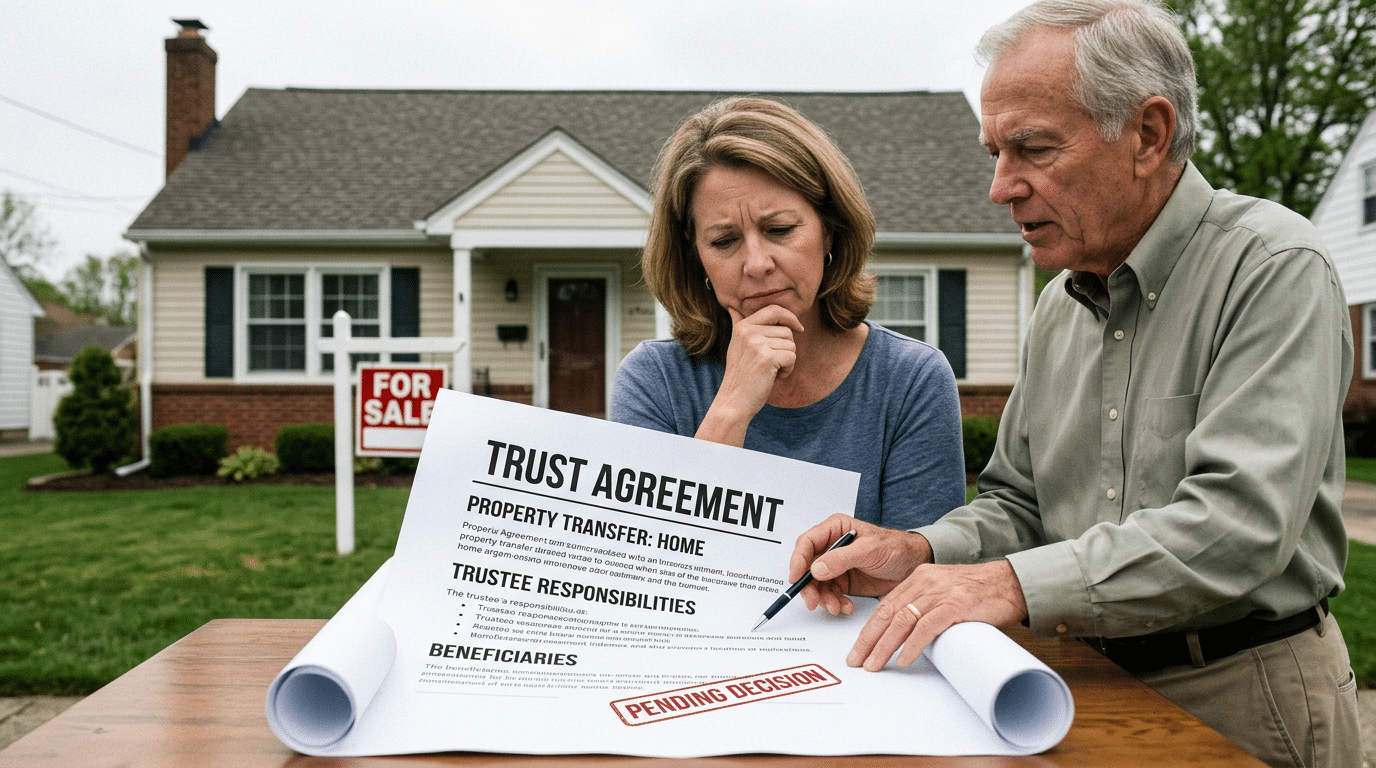
For many New Yorkers, a home is their biggest asset and a key part of their estate plan. This often leads to a common question: Should you put your home into a trust? The answer depends on your goals, the type of trust you are considering, your family situation, and whether you own property outside New York. Moving a home into a trust can offer real estate planning benefits, but just signing a trust document does not guarantee those results. We believe you should start by thinking about your own objectives, not by assuming that every homeowner should or should not use a trust.
At Bernard Law P.C., we often talk with homeowners in Suffolk County, including those whose Long Island home is a major part of their assets. We also help snowbirds who have homes in both New York and Florida. For these clients, setting up real estate ownership the right way is important because otherwise, their estate might involve property and court cases in more than one state. The right trust can make things much easier, but the wrong setup can lead to tax, loan, creditor, or paperwork problems you did not expect.
A Revocable Living Trust Can Keep A Home Outside The Probate Estate
A main reason people put a home into a revocable living trust is to avoid probate for that property. If you own real estate in your name when you pass away, your executor usually has to handle it through probate. But if you moved the property into a trust while you were alive, the trustee can usually manage it according to the trust’s rules.
New York Estates, Powers and Trusts Law § 7-1.17 establishes execution requirements for lifetime trusts. EPTL § 7-1.18 addresses an equally important issue: funding. Under that statute, a lifetime trust is valid with respect to assets that have actually been transferred to it. When real estate is involved, creating a beautiful trust agreement and leaving the deed in your individual name can defeat an important reason for creating the trust in the first place.
It is easy to miss this detail. Sometimes, people tell us their home is “covered by their trust” just because they signed a trust years ago. Our first question is always whether the property title was actually transferred. Estate planning is about putting plans into action, not just preparing documents.
Putting Your Home Into A Trust Can Also Help During Incapacity
Probate occurs after death, but a well-designed estate plan should also address what happens while you are alive. This is another reason a revocable trust can be useful for homeowners.
If you become very ill or are unable to manage your property, and your home is already in a well-structured revocable trust, a successor trustee can step in under the trust’s rules. Depending on what the trust allows, this person can take care of the home, pay bills, manage it, or sell it if needed, all without having to change ownership during a difficult time.
This is especially helpful for older homeowners and snowbirds whose children live far away. Managing a property does not stop if the owner gets sick. Bills, insurance, repairs, and other costs still need attention. Including your home in an incapacity plan is just as important as deciding who will inherit it.
New York EPTL § 11-1.1 provides fiduciaries with numerous statutory powers concerning trust property, subject to the terms of the governing instrument. The trust itself should therefore be drafted thoughtfully so the trustee has appropriate authority while remaining accountable to the beneficiaries.
A Revocable Trust Does Not Automatically Protect Your House From Creditors
One misconception we want homeowners to understand is that putting a house into “a trust” does not automatically create asset protection.
A revocable living trust generally allows you to retain significant control over the property. That control is one reason these trusts are flexible and useful for probate and incapacity planning, but it also means they should not be confused with irrevocable asset protection strategies. New York’s rules concerning trusts and creditor rights make the specific structure of the trust extremely important.
An irrevocable trust raises an entirely different set of considerations. Such arrangements may be used for particular tax, asset preservation, Medicaid, or long-term planning objectives, but transferring a home to an irrevocable trust can require surrendering rights or control that you would retain under a revocable trust. The tax treatment, ability to sell the property, rights of beneficiaries, and effect of a future move must all be examined before the transfer occurs.
This is why we discourage homeowners from selecting a trust solely because a friend, relative, seminar presenter, or online source said everyone should have one. We need to know why you are creating it. Probate avoidance and asset protection are not the same objective, and they may call for substantially different planning.
New York Snowbirds With Florida Homes Have Additional Reasons To Review Ownership
Trust planning can become particularly useful when a client owns real estate in both New York and Florida. Real property is generally subject to the laws and probate procedures of the state in which it is located. If a New York domiciliary dies owning Florida real estate individually, the family may face the possibility of a Florida ancillary administration in addition to proceedings in New York.
Placing appropriate real estate into a revocable trust during life may help avoid that additional probate proceeding because the trustee, rather than the deceased individual, holds title. For someone who maintains a Suffolk County home and a winter residence in Boca Raton, Naples, or another Florida community, avoiding multiple estate proceedings can be a legitimate planning objective.
Florida property requires particular care, however. Florida has distinctive constitutional and statutory rules involving homestead property. Florida Statutes §§ 732.401 and 732.4015 address descent and restrictions on the devise of protected homestead, particularly when a surviving spouse or minor child is involved. A transfer involving Florida homestead should therefore be reviewed as part of coordinated New York and Florida planning rather than treated as a routine deed change.
We also caution clients against assuming that a revocable trust creates creditor protection simply because Florida property is involved. Florida Statutes § 736.0505 generally provides that property in a settlor’s revocable trust remains subject to the settlor’s creditor claims during the settlor’s lifetime.
The Better Question Is What You Want The Trust To Accomplish
For many homeowners, placing a residence into a trust can make sense. It may simplify administration after death, provide continuity if incapacity occurs, help avoid probate for the property, and make multistate estate planning more manageable. But those advantages do not mean every homeowner should sign the same trust.
We look at the entire picture. Who owns the property now? Is there a mortgage? Is the property a primary residence, second home, investment property, or Florida homestead? Who should inherit it? Do you want your children to receive it outright, or should the property remain protected in trust? Are estate taxes, long-term care planning, creditor concerns, or business interests involved? Those questions determine what type of planning is appropriate.
A home is too valuable to transfer into a trust simply because putting property into trusts has become common estate planning advice. The trust, deed, tax planning, beneficiary provisions, and rest of the estate plan should work together. Our goal is not simply to put your home into a trust. It is to determine whether doing so solves a genuine estate planning problem for you and your family.
Contact Our Hauppauge Estate Planning Attorney For A Free Consultation
Deciding whether to put your home into a trust should be based on your property, your family, and what you want your estate plan to accomplish. At Bernard Law P.C., we create individualized estate plans rather than forcing clients into predetermined solutions. We help Suffolk County families evaluate trusts, wills, incapacity planning, estate tax concerns, real estate ownership, and the long-term transfer of family wealth.
Our experience working with New York snowbirds also allows us to identify issues that can arise when a family owns homes or other assets in both New York and Florida. Proper coordination today can reduce unnecessary court proceedings and administrative problems for your family later.
If you are considering putting your home into a trust or want to know whether your current trust is properly structured and funded, we can review your circumstances and explain your options. Bernard Law P.C. is located in Hauppauge, New York, and serves clients throughout Suffolk County. Call our Hauppauge estate planning attorney at Bernard Law P.C. at (631) 378-2500 to schedule a free consultation.